KU-60019 and KU60019 inhibit ATM kinase in KMT2A rearranged acute leukemias
Copy code to add this image to your page
Lysine methyltransferase 2A (KMT2A) gene rearrangements define an aggressive subtype of acute leukemia characterized by distinct transcriptional profiles, high relapse rates, and poor overall prognosis across pediatric and adult patient populations. These chromosomal translocations generate oncogenic fusion proteins that subvert gene regulation, maintaining leukemic blasts in an undifferentiated, highly proliferative state. To identify targeted therapeutic vulnerabilities within this genetically defined cohort, systematic mining of high-throughput pharmacogenomic databases offers a rigorous, unbiased approach. In this context, profiling data from the Genomics of Drug Sensitivity in Cancer (GDSC) repository provides critical insights into differential drug responsiveness across diverse hematopoietic cancer cell line panels.
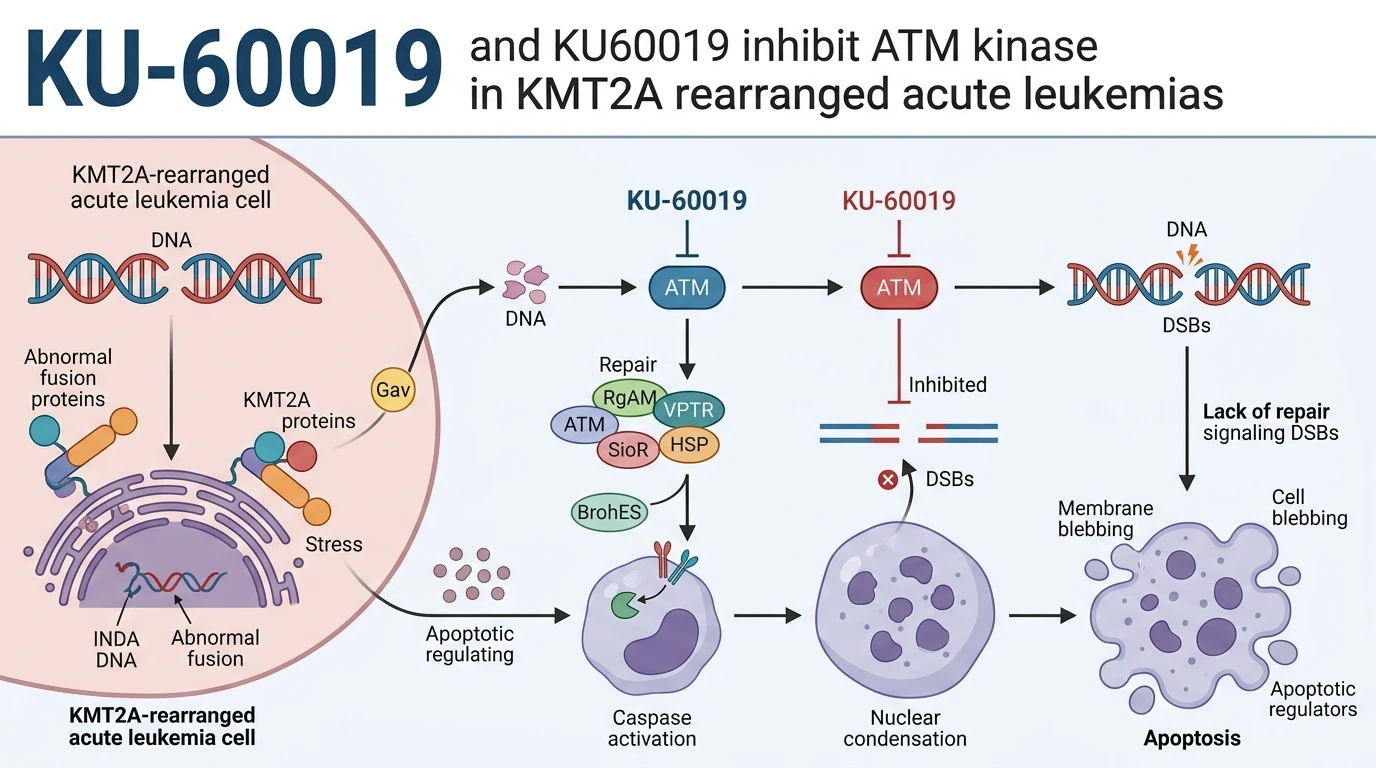
Pharmacogenomic evaluation of GDSC drug sensitivity metrics across acute leukemia cell models demonstrated marked differential sensitivity to KU-60019, an improved, highly potent ATP-competitive inhibitor of the ATM kinase. When comparing cell lines harboring KMT2A rearrangements (KMT2A-r) against KMT2A wild-type models, statistical analysis revealed a significantly heightened susceptibility in the rearranged cohort (p = 0.046). ATM kinase serves as a central nodal regulator of the double-strand break (DSB) repair cascade, initiating signal transduction via autophosphorylation at Ser1981 in response to ionizing radiation or severe replication stress. Inhibiting this catalytic core using KU-60019 disrupts downstream substrate activation, thereby impairing homologous recombination repair (HRR) and non-homologous end joining (NHEJ) pathways.
Mechanistically, KMT2A-rearranged leukemic cells routinely exhibit elevated baseline levels of transcription-associated DNA damage and oxidative stress driven by oncogenic fusion proteins such as KMT2A-AFF1 (MLL-AF4) or KMT2A-MLLT3 (MLL-AF9). This heightened baseline genomic stress renders these blasts heavily dependent on intact DNA damage response (DDR) signaling networks for survival. By blocking ATM kinase activity, KU-60019 prevents cellular adaptation to endogenous DNA lesions. Under tested in vitro assay conditions, this pharmacological blockade converts repairable double-strand breaks into permanent genomic alterations, driving leukemic blasts toward apoptotic cascade activation rather than cell cycle arrest and recovery.
These GDSC-derived empirical observations establish a clear biological rationale for targeting ATM kinase signaling in KMT2A-r acute leukemias. Because traditional cytotoxic chemotherapy regimens present severe off-target toxicities and limited sustained remission rates in KMT2A-r leukemia cohorts, small-molecule inhibition of ATM represents a tailored precision medicine approach. Further translational studies in primary patient samples and patient-derived xenograft (PDX) models remain necessary to confirm whether the observed in vitro sensitivity translates into prolonged survival outcomes and durable therapeutic indices in vivo.
Genomic Sensitivity and Pharmacological Evaluation of ATM Kinase Inhibition
Copy code to add this image to your page
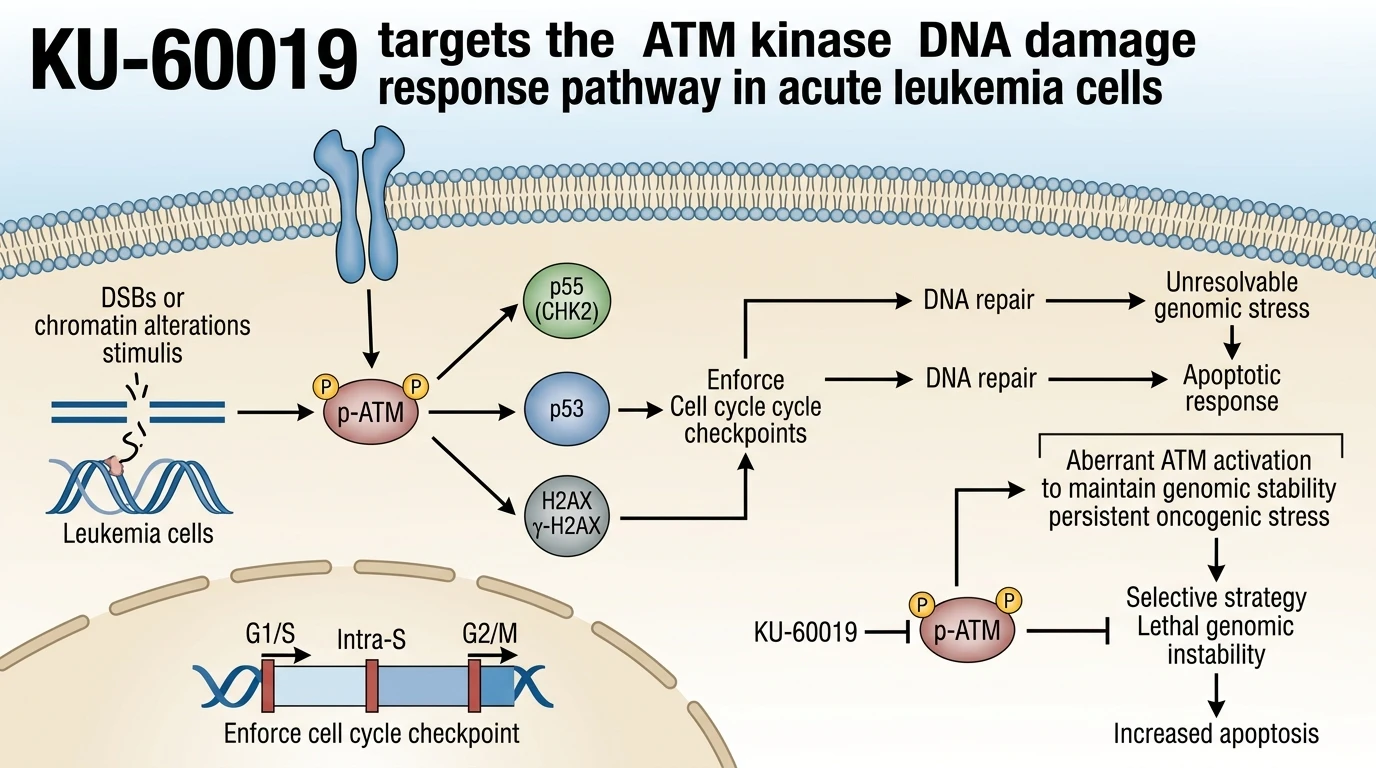
KU-60019 functions as an ATP-competitive ATM kinase inhibitor that blocks autophosphorylation at Ser1981 and prevents recruitment of downstream repair factors such as CHK2 and p53. In KMT2A-rearranged acute leukemia cell lines, this targeted disruption compromises DNA double-strand break repair, converting endogenous replication stress into catastrophic genomic instability. Inhibiting ATM kinase activity attenuates checkpoint arrest, selectively driving KMT2A-rearranged leukemic cells into apoptotic death under in vitro screening conditions.
Differential GDSC Sensitivity Profiles in KMT2A Rearranged Leukemias
Comparative analysis of drug response metrics across acute leukemia lines identified distinct pharmacogenomic dependencies. KMT2A-rearranged models exhibited heightened sensitivity to ATM inhibition relative to wild-type controls. Screening data for KU60019 demonstrated a statistically significant drop in relative survival metrics within the rearranged cohort (p = 0.046). Target engagement was evident at sub-micromolar concentrations. Cell viability decreased rapidly following treatment. This differential sensitivity suggests that KMT2A fusion proteins induce a specific reliance on intact ATM-mediated repair signaling.
Synthetic Lethality Mechanisms Driven by ATM Kinase Blockade
Ataxia telangiectasia mutated kinase coordinates checkpoint activation following double-strand DNA cleavage. Applying KU60019 directly compromises autophosphorylation events required for downstream CHK2 substrate engagement; subsequently, G2/M arrest mechanisms fail under sustained double-strand break accumulation. Unrepaired DNA lesions persist during S-phase progression. Apoptosis ensued within forty-eight hours in vitro. These empirical observations remain constrained to defined culture systems; nevertheless, the observed synthetic lethality highlights a potential vulnerability in KMT2A-rearranged acute leukemia models.