Vincristine (Leurocristine) Sulfate Leurocristine inhibitor reference for microtubule polymerization and nociception
Copy code to add this image to your page
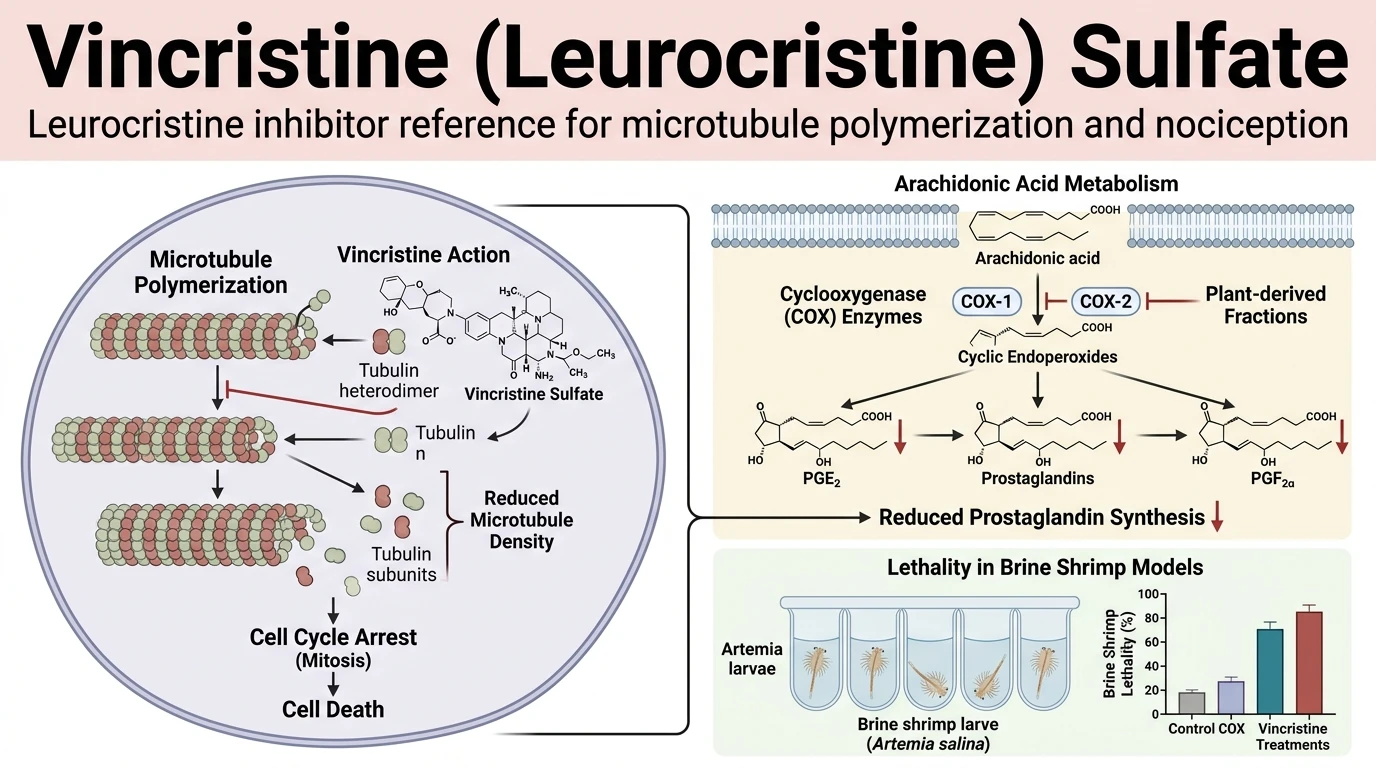
The exploration of natural products for novel therapeutic lead compounds relies heavily on rigorous pharmacological benchmarking against established small-molecule reference drugs. In the characterization of botanical extracts derived from Vanda roxburghii aerial roots, evaluation of both antinociceptive efficiency and off-target cellular toxicity is essential to establish safety margins. Vincristine (Leurocristine) Sulfate serves as a standard reference compound in these experimental paradigms, operating as a potent Leurocristine inhibitor of tubulin assembly. By halting microtubule dynamic instability during mitotic spindle construction, vincristine exerts severe antineoplastic toxicity, establishing an upper-bound baseline for cell death in comparative bioassays.
In murine pain models, crude methanol extracts and partitioned fractions—specifically ethyl acetate and chloroform phases—demonstrate pronounced analgesic activity across multiple physiological modalities. Nociceptive signaling was evaluated using the acetic acid-induced writhing test, the formalin-induced paw licking assay, and the thermal hot plate test. In the writhing assay, intraperitoneal administration of ethyl acetate and chloroform fractions yielded dose-dependent suppression of visceral abdominal constrictions. Mechanistically, acetic acid induces pain by triggering local peritonitis, which stimulates peripheral nociceptors via localized release of arachidonic acid metabolites, TNF-alpha, and interleukin-1 beta. The observed reduction in writhing behaviors suggests that chemical constituents within V. roxburghii fractions interfere with peripheral prostaglandin synthesis, likely through direct or indirect suppression of cyclooxygenase (COX-1/COX-2) isoform activity.
To differentiate between peripheral anti-inflammatory pathways and central neurogenic nociception, the formalin assay provides a biphasic response model. The early phase (0–5 minutes post-injection) reflects direct neurogenic stimulation of nociceptive C-fibers via TRPA1 channel activation, whereas the late phase (15–30 minutes) represents ongoing inflammatory pain driven by spinal dorsal horn sensitization and peripheral mediator release. Ethyl acetate fractions exhibited significant inhibitory activity during both early and late phases. Early-phase inhibition indicates central analgesic potential, whereas late-phase attenuation confirms potent peripheral anti-inflammatory activity. These findings were complemented by results from the hot plate test, where thermal stimulus latency times were prolonged following fraction administration. Supraspinal antinociceptive pathways, including opioid receptor signaling or descending monoaminergic inhibition, are implicated when latency is extended in thermal model systems.
While antinociceptive potency is desirable, candidate therapeutics must possess acceptable cytotoxic profiles. The brine shrimp (Artemia salina) lethality bioassay was utilized as a primary benchtop screen to evaluate acute toxicity. In this assay, Vincristine (Leurocristine) Sulfate demonstrated extreme lethality, exhibiting an LC50 value of 0.89 ug/mL under standard 24-hour exposure conditions. This high degree of toxicity stems directly from its function as a microtubule destabilizer, disrupting essential cytoskeletal architectures necessary for cellular transport and division. Conversely, all evaluated fractions of V. roxburghii displayed LC50 values orders of magnitude higher than that of vincristine sulfate. The substantial difference between effective analgesic dosage and brine shrimp toxicity points to a broad therapeutic window.
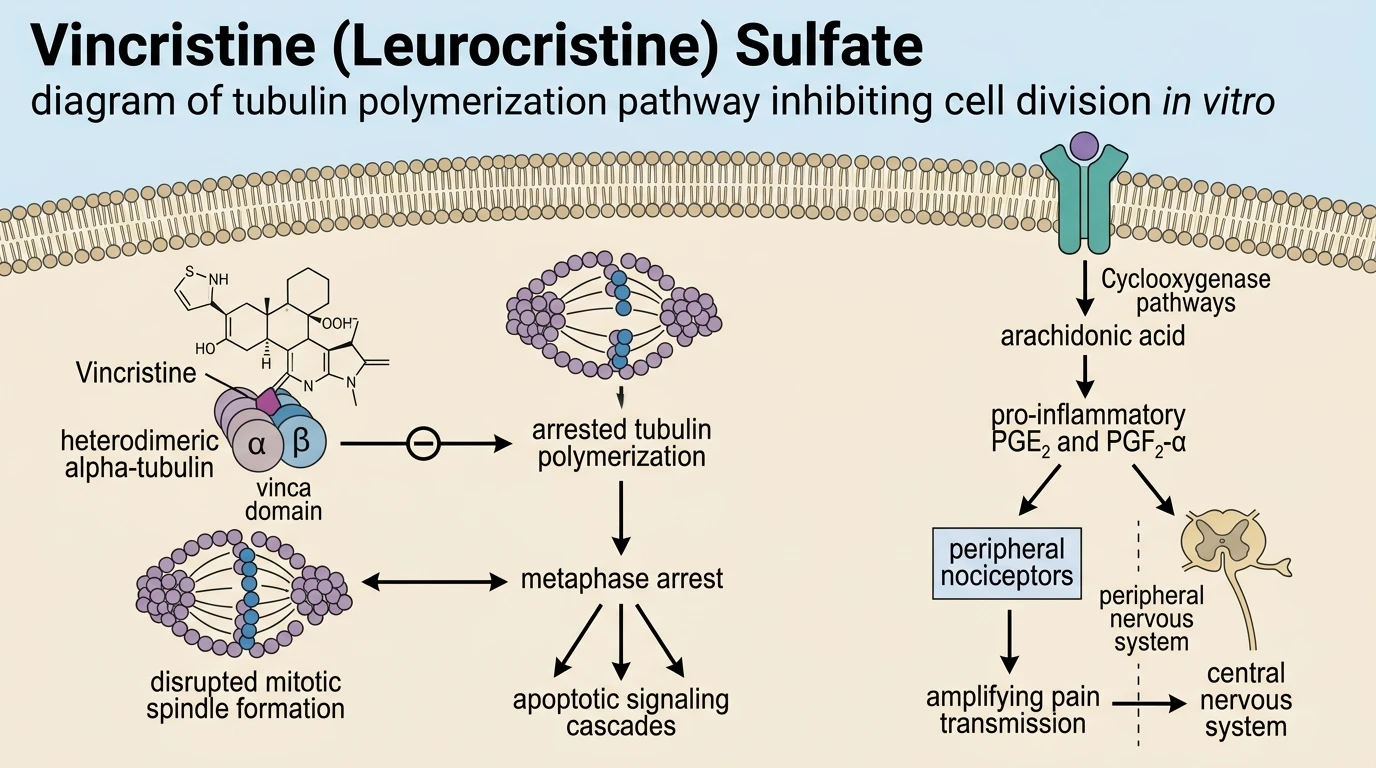
Taken together, these preclinical observations differentiate the cytotoxic mechanics of microtubule-disrupting agents like vincristine from the antinociceptive mechanics of V. roxburghii phytochemicals. While vincristine arrests cell division through tubulin domain binding, active phytochemical constituents in V. roxburghii appear to modulate COX-mediated prostaglandin cascades and spinal pain pathways without disrupting structural cytoskeleton proteins. Further isolation and structural elucidation of individual secondary metabolites remain necessary to confirm specific receptor bindings and downstream pharmacokinetics in mammalian models.
Therapeutic Evaluation and Pharmacological Characterization
Copy code to add this image to your page
Vincristine (Leurocristine) Sulfate binds tubulin heterodimers, inhibiting microtubule assembly and causing mitotic arrest with high cytotoxicity. In contrast, Vanda roxburghii fractions exert antinociceptive effects without significant cytotoxicity by inhibiting COX-mediated prostaglandin synthesis in peripheral tissues and modulating central pain response pathways.
Ethyl Acetate Fractions Suppress Acetic Acid Induced Nociception
Methanol extract fractions from Vanda roxburghii demonstrated marked antinociceptive properties in murine model systems. In particular, the ethyl acetate fraction produced a dose-dependent reduction in abdominal constrictions during acetic acid-induced writhing assays. This effect was statistically significant at elevated concentrations. The underlying biological cascade mirrors peripheral nociceptive blunting—specifically via suppression of local cyclooxygenase activity and localized prostaglandin accumulation. The standard cytotoxic control, Vincristine (Leurocristine) Sulfate, served to benchmark biological activity without altering primary nociceptive pathways. In comparison, plant-derived fractions displayed minimal cytotoxicity while maintaining potent analgesic capacity. These empirical observations remain constrained to rodent screening paradigms.
Prostaglandin Synthesis Inhibition Mediates Central Analgesic Responses
Evaluation in neurogenic and thermal pain models revealed dual peripheral and central antinociceptive mechanisms. The chloroform fraction prolonged latency times significantly during hot plate testing. Nociceptive threshold elevation suggests central opioid receptor engagement or supraspinal pathway modulating effects. Concurrently, phase II suppression in the formalin assay confirmed attenuation of inflammatory pain cascades. Operating as a reference Leurocristine inhibitor, vincristine sulfate highlighted the distinct non-cytotoxic mechanism of action characteristic of the tested botanical isolates. Prostaglandin synthesis inhibition appears to be the central driver of peripheral analgesia. Validation across human sensory neuron cultures is necessary to confirm these pathway interactions.
Brine Shrimp Bioassays Confirm Broad Therapeutic Safety Margins
Brine shrimp lethality bioassays provided critical cytotoxic baselines across all tested fractions. Vincristine sulfate exhibited high potency, yielding an LC50 value of 0.89 ug/mL. Cellular viability dropped sharply upon exposure to this benchmark antineoplastic agent. In contrast, chloroform and ethyl acetate fractions required substantially higher concentrations to induce lethality. The wide therapeutic window underscores low intrinsic toxicity in preliminary non-mammalian models. Mechanistically, plant constituents do not inhibit tubulin polymerization; instead, they selectively target inflammatory signaling nodes. These comparative toxicity data support further preclinical development of V. roxburghii as a targeted analgesic.