Complement System Inhibitors
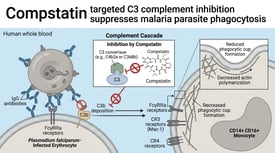
The Complement System is an intricate and essential component of innate immunity, comprising a cascade of plasma proteins that, upon activation, orchestrate pathogen opsonization, direct lysis, and inflammatory responses. It can be activated through three main pathways: the classical pathway, typically initiated by antibody-antigen complexes; the lectin pathway, activated by microbial carbohydrate patterns; and the alternative pathway, which undergoes continuous low-level spontaneous activation. All three pathways converge at the point of C3 convertase formation, which cleaves C3 into C3a (a potent anaphylatoxin) and C3b. C3b then initiates the formation of C5 convertase, leading to the cleavage of C5 into C5a (another powerful anaphylatoxin) and C5b, which ultimately assembles the membrane attack complex (MAC, C5b-9) responsible for direct cell lysis. While crucial for host defense, uncontrolled or inappropriate complement activation contributes significantly to the pathogenesis of numerous diseases. Diseases associated with complement dysregulation are diverse and often severe. These include paroxysmal nocturnal hemoglobinuria (PNH), atypical hemolytic uremic syndrome (aHUS), myasthenia gravis (gMG), neuromyelitis optica spectrum disorder (NMOSD), and C3 glomerulopathy, where complement overactivation directly mediates cell damage or inflammation.
Furthermore, complement plays a role in age-related macular degeneration (AMD), lupus nephritis, and ischemia-reperfusion injury, contributing to tissue damage and disease progression. The broad involvement of complement in both rare and common diseases highlights the therapeutic potential of its targeted inhibition. Research into Complement System inhibitors is a highly active and successful area of drug development, with several approved drugs and numerous agents in clinical trials. Eculizumab (Soliris) and ravulizumab (Ultomiris), both anti-C5 monoclonal antibodies, are approved for PNH, aHUS, gMG, and NMOSD, revolutionizing treatment for these conditions. Pegcetacoplan (Empaveli/Aspaveli), a C3 inhibitor, is approved for PNH. Beyond C5 and C3, numerous inhibitors targeting other points in the cascade are in various phases of clinical trials, including C1s inhibitors, Factor D inhibitors (e.g., iptacopan), Factor B inhibitors, and C5a receptor antagonists (e.g., avacopan). These inhibitors are classified by their target (e.g., C1s, Factor D, Factor B, C3, C5, C5aR, MAC) and modality (monoclonal antibodies, small molecules, peptides, aptamers).
Preclinical efforts are also exploring oral small molecule inhibitors and gene therapies for sustained complement modulation. Key challenges in complement inhibition include the risk of increased susceptibility to infections, particularly from encapsulated bacteria like Neisseria meningitidis, especially with C5 inhibitors that block MAC formation. The need for lifelong treatment in chronic conditions, the high cost of biologic therapies, and the potential for resistance or breakthrough events also pose significant hurdles. Cobra venom factor (CVF) and specific antibodies against complement components serve as important research tools. Combination therapy strategies are being explored for complex diseases, where inhibitors targeting different complement components or pathways might offer synergistic benefits. Complement inhibitors can also be combined with immunosuppressants or other disease-specific therapies. Monitoring complement component levels (C3, C4), complement activity assays (CH50, AH50), and levels of activation products (C3a, C5a, sC5b-9) are crucial biomarkers for assessing target engagement, disease activity, and treatment response.
The continued innovation in complement inhibition promises to expand therapeutic options for a growing number of complement-mediated disorders.