Ponatinib (AP24534) AP24534 inhibitor Notch1 signaling drive in sex-differentiated cardiotoxicity
Copy code to add this image to your page
Ponatinib (AP24534) is a potent multi-kinase inhibitor engineered to overcome BCR-ABL T315I gatekeeper mutations while broadly targeting VEGFR-1/Flt1, FGFR, and PDGFR receptor tyrosine kinases. Clinically effective in refractory Philadelphia chromosome-positive leukemias, its clinical application is constrained by severe adverse cardiovascular events. Clinical trials and post-marketing surveillance document systemic hypertension, arterial thrombotic occlusions, and heart failure. While early toxicity models attributed these off-target pathologies primarily to vascular endothelial growth factor receptor suppression, recent experimental evidence implicates direct myocardial remodeling and signaling reprogramming. Specifically, activation of the Notch1 signaling cascade operates as a primary driver of sex-differentiated myocardial injury following ponatinib administration.
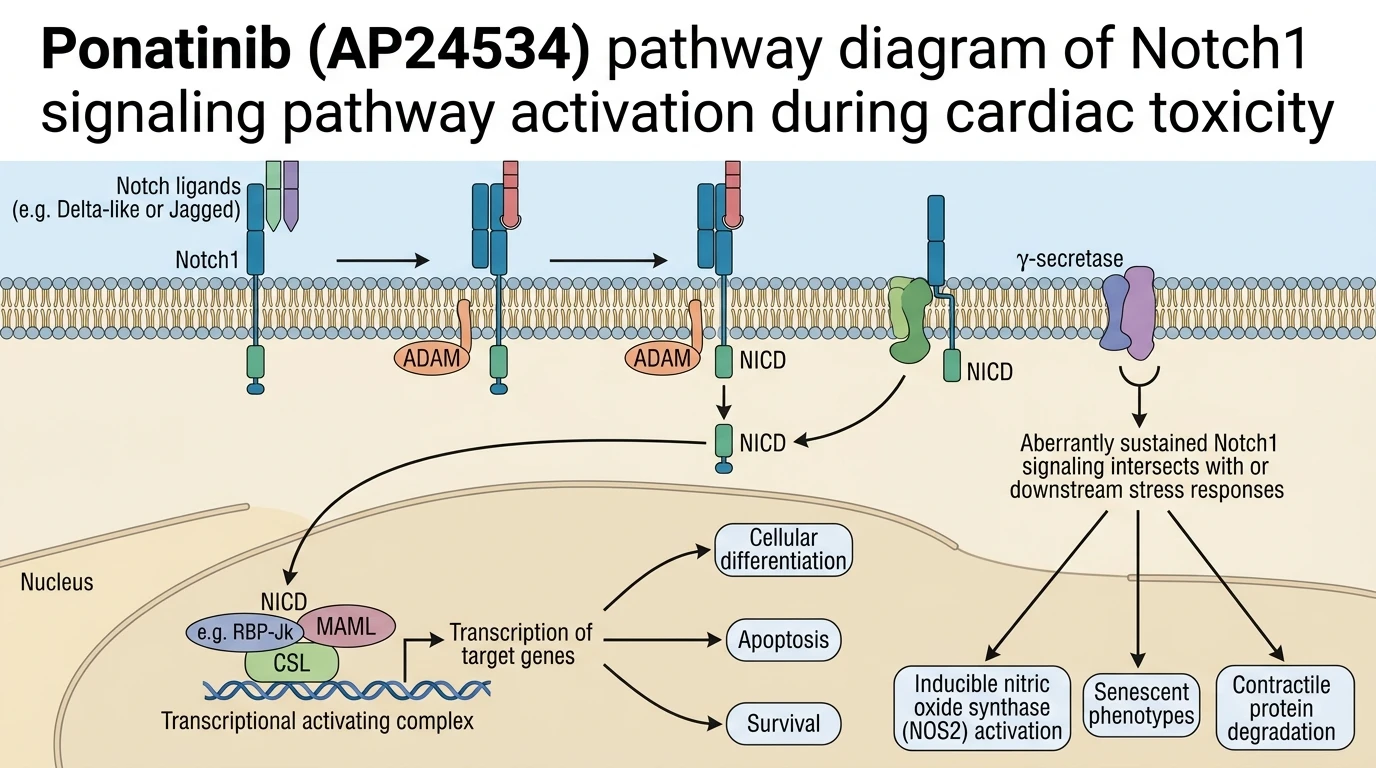
At the cellular level, the Notch1 signaling architecture consists of a transmembrane receptor cleaved sequentially by ADAM metalloproteases and gamma-secretase complexes. Ligand engagement releases the Notch intracellular domain (NICD), which translocates to the nucleus to initiate target gene transcription. In murine models exposed to therapeutic doses of ponatinib, Notch1 pathway activity increases sharply within myocardial tissue. This activation triggers an aberrant stress response rather than a protective developmental signal. Downstream execution involves elevated expression of inducible nitric oxide synthase (NOS2), myofibrillar protein degradation, and cellular senescence pathways.
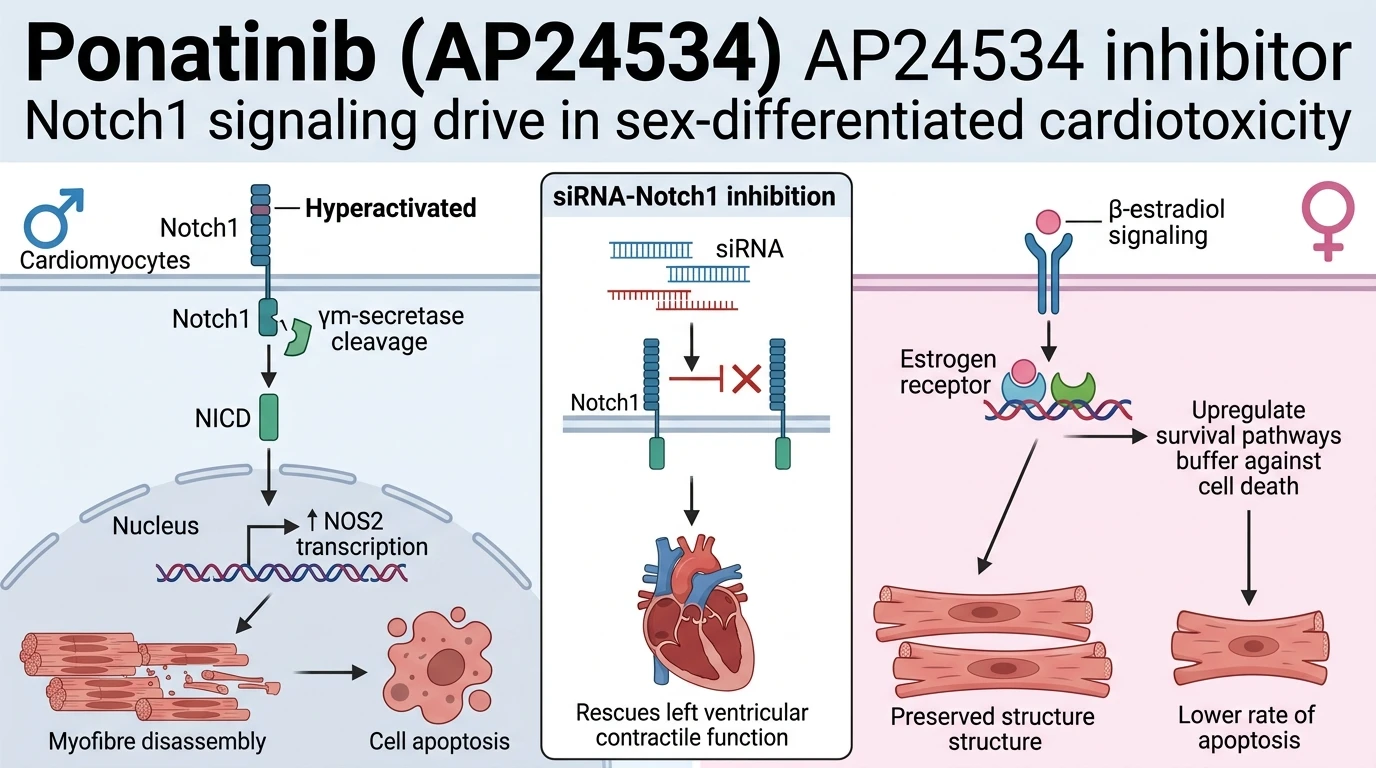
Experimental evaluations reveal a pronounced sex-dependent divergence in susceptibility to this toxic cascade. Male mice exposed to ponatinib demonstrate markedly enhanced cardiac cell apoptosis relative to female cohorts. Histological sections from treated male hearts reveal disrupted myofibrillar alignment, expanded interstitial space, and increased senescence-associated beta-galactosidase activity. Functional echocardiographic measurements reflect these structural deficits; male animals exhibit severe reductions in left ventricular ejection fraction and fractional shortening. In contrast, female mice subjected to identical dosing regimens display attenuated apoptotic rates and preserved left ventricular systolic parameters under identical experimental timelines.
Proteomic profiling and upstream regulator analysis illuminate the biochemical basis of this sexual dimorphism. In female myocardial tissue, exposure to the AP24534 inhibitor triggers concurrent upregulation of beta-estradiol network nodes and pro-survival cascades. Estrogen receptor signaling suppresses toxic downstream execution nodes, buffering cardiomyocytes against ponatinib-induced oxidative stress and NOS2 induction. Conversely, male proteomic signatures lack this estrogenic protective buffer. Instead, male myocardial networks shift heavily toward downstream apoptotic cascades, characterized by elevated NOS2 expression, elevated reactive nitrogen species, and accelerated loss of structural sarcomeric proteins.
Targeted silencing of Notch1 via small interfering RNA (siRNA-Notch1) confirms the central role of this receptor system. In both male and female experimental models, gene silencing of Notch1 suppresses ponatinib-induced apoptotic markers and attenuates senescence pathways. Silencing Notch1 prevents the loss of systolic function in vivo, normalizing left ventricular ejection fractions across both sexes. These observations demonstrate that Notch1 hyperactivation is not merely an unspecific bystander phenomenon, but rather a functional driver of tyrosine kinase inhibitor-induced cardiotoxicity. The identification of Notch1 as a therapeutic vulnerability provides a molecular framework for decoupling antineoplastic efficacy from severe cardiac adverse events.
Therapeutic Evaluation and Pharmacological Characterization
Copy code to add this image to your page
Ponatinib activates Notch1 signaling in cardiac tissue, driving sex-differentiated cardiotoxicity. Male myocardium shows higher cell apoptosis, NOS2 upregulation, cellular senescence, and left ventricular systolic dysfunction compared to female tissue, which is buffered by beta-estradiol survival pathways. Silencing Notch1 via siRNA attenuates apoptosis and restores contractile performance in both sexes.
Sex-Differentiated Proteomic Profiles in Murine Ventricular Tissue
Proteomic screens revealed distinct molecular networks activated in male and female hearts during exposure to the AP24534 inhibitor. Male myocardial samples exhibited pronounced upregulation of NOS2 expression alongside activated cell death pathways. Functional contractile parameters deteriorated rapidly in male cohorts. Left ventricular ejection fraction dropped within days of treatment initiation. Conversely, female ventricular tissue maintained activation of beta-estradiol signaling cascades and downstream survival nodes. This endocrine buffer mitigated apoptotic cellular damage. Myofibrillar geometry remained structurally intact in female hearts.
Notch1 Gene Silencing Restores Left Ventricular Ejection Fraction
Knockdown of Notch1 expression via specific siRNA constructs blocked downstream apoptotic pathways in both sexes. In vivo administration of siRNA-Notch1 restored left ventricular systolic performance in treated animals. Contractile parameters returned to near-baseline values despite continued exposure to the AP24534 inhibitor. Microscopic evaluation confirmed reduced senescence-associated beta-galactosidase staining and diminished cellular fragmentation. This intervention establishes Notch1 activation as an indispensable mediator of kinase inhibitor cardiotoxicity. Pharmacological co-targeting of Notch1 represents a viable strategy to protect cardiac function.