PF-02341066 (Crizotinib) PF-02341066 c-Met targeted inhibition in ALK non-small-cell lung cancer
Copy code to add this image to your page
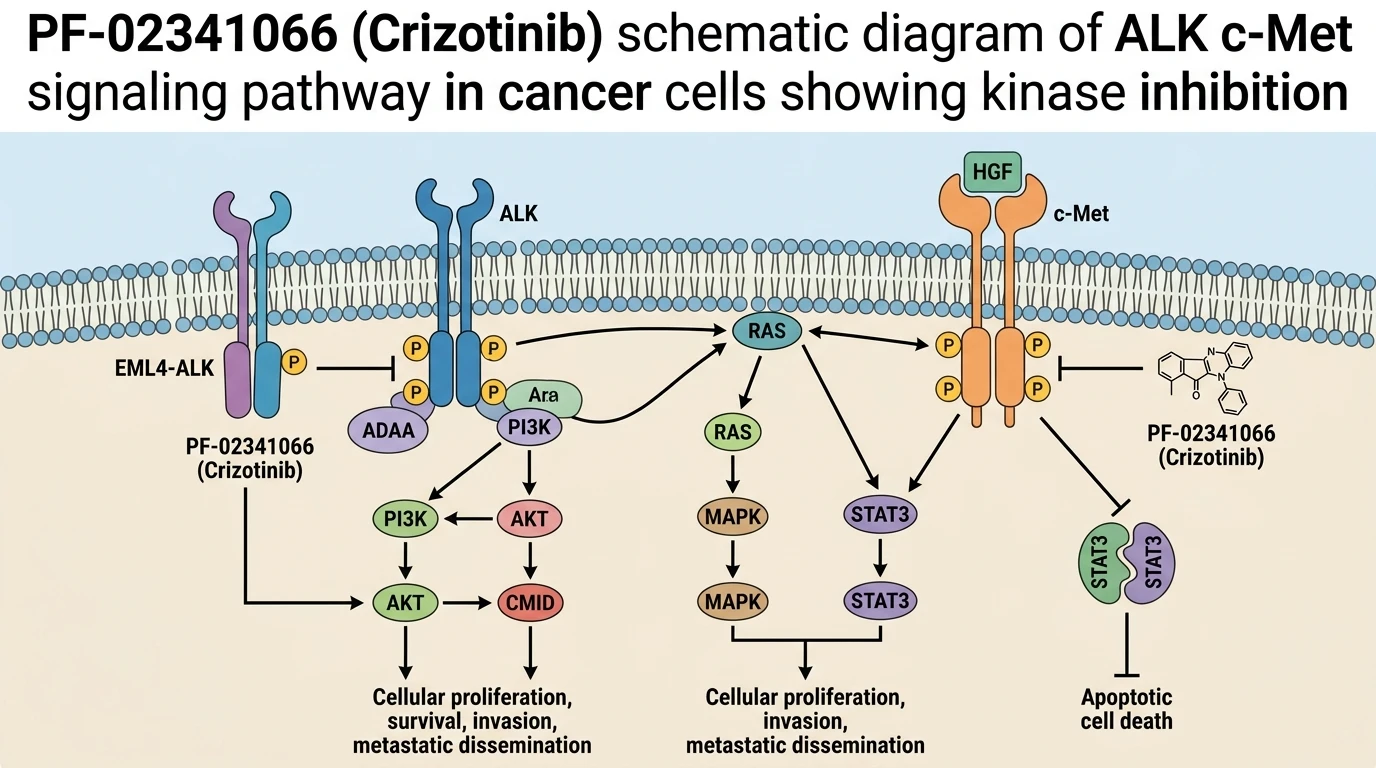
Anaplastic lymphoma kinase (ALK) rearrangement defines a distinct molecular subset of non-small-cell lung cancer (NSCLC), accounting for approximately 3% to 5% of all clinical presentations. The primary oncogenic driver in these malignancies is the EML4-ALK chimeric fusion protein, generated by a recurrent pericentric inversion on chromosome 2p. The resulting fusion gene leads to constitutive, ligand-independent dimerization of the intracellular ALK kinase domain. This constitutive kinase activation triggers key downstream survival networks, including the PI3K/AKT, MAPK/ERK, and STAT3 signal transduction pathways. Early targeted interventions relied on small-molecule ATP-competitive inhibitors of receptor tyrosine kinase inhibitors, specifically PF-02341066 (Crizotinib), which blocks both ALK and MET receptor active sites. Binding of PF-02341066 c-Met halts trans-autophosphorylation of critical tyrosine residues, suspending downstream proliferative signals and driving targeted apoptosis in ALK-dependent tumor cells.
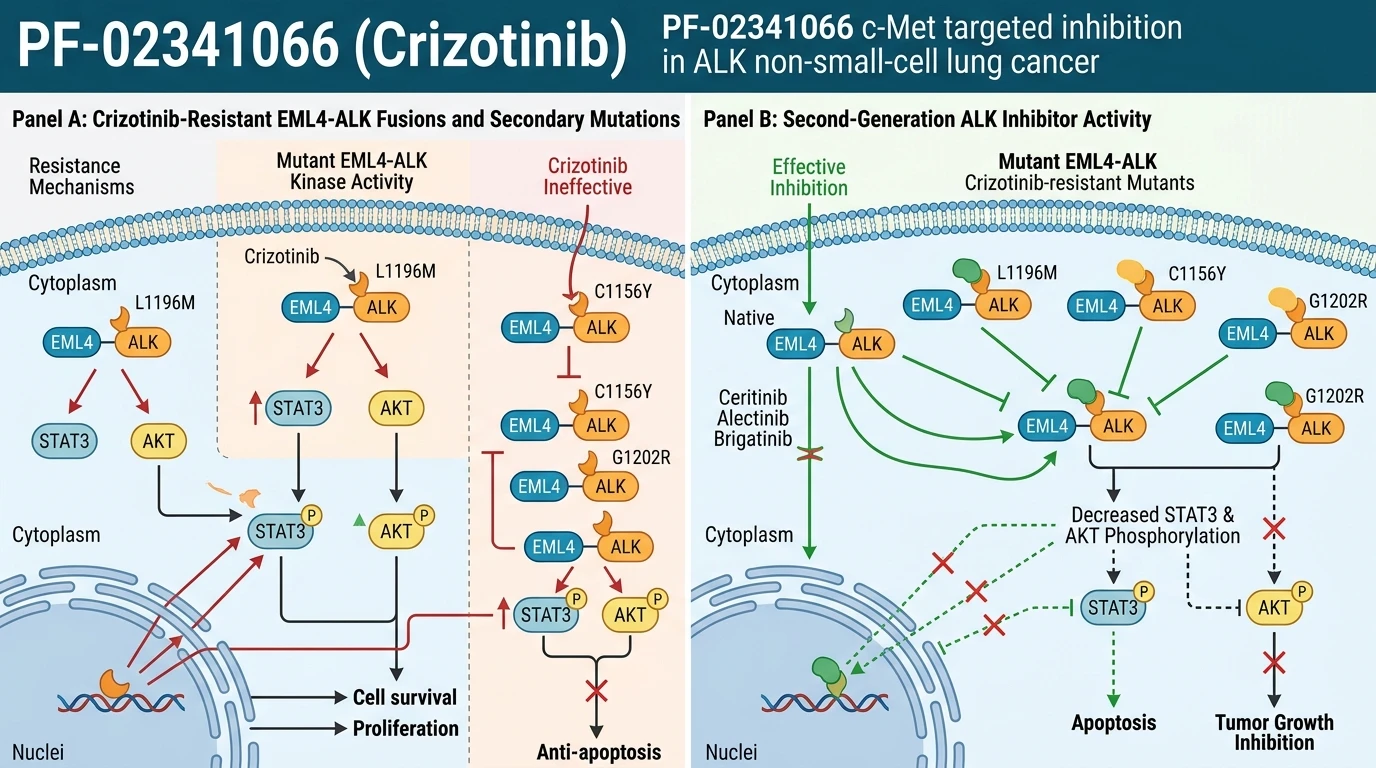
Despite high initial objective response rates with first-generation ALK inhibitor therapy, therapeutic durability remains limited by acquired resistance mechanisms. Selective pressure from continuous PF-02341066 (Crizotinib) administration drives disease progression within a median window of 10 to 14 months. Mechanisms of targeted resistance include secondary point mutations within the ALK catalytic domain—such as L1196M gatekeeper mutations, C1156Y, and G1202R solvent-front substitutions—which induce steric hindrance or alter ATP affinity. Pharmacokinetic barriers also impair clinical efficacy; PF-02341066 (Crizotinib) exhibits limited central nervous system penetration due to active drug efflux by P-glycoprotein at the blood-brain barrier, making the brain a common site of therapeutic failure.
To address these failure modes, second-generation ALK inhibitors with enhanced potency and central nervous system bioavailability were developed. The phase III ALUR study delivered definitive comparative clinical data regarding the second-generation inhibitor alectinib in patients with advanced ALK-positive NSCLC who experienced progression following sequential treatment with PF-02341066 (Crizotinib) and platinum-based chemotherapy. Final analysis of the ALUR trial confirmed marked improvements across clinical efficacy metrics compared to investigator-choice chemotherapy (pemetrexed or docetaxel).
Alectinib achieved a median progression-free survival (PFS) of 10.9 months compared to 1.4 months for single-agent chemotherapy, corresponding to an 80% reduction in the risk of disease progression or death (hazard ratio 0.20, P < 0.001). Systemic response rates reflected this survival advantage, with an overall response rate (ORR) of 50.6% in the alectinib cohort versus 2.5% in the chemotherapy arm. Intracranial activity was pronounced: among patients with baseline measurable central nervous system lesions, alectinib demonstrated an intracranial objective response rate of 66.7%, whereas chemotherapy yielded no observable CNS responses (0%).
Exploratory biomarker evaluations utilizing blood-based next-generation sequencing (NGS) provided essential biological insights into clinical responses. Circulating tumor DNA (ctDNA) analyses demonstrated that alectinib retained antiproliferative activity against multiple secondary ALK resistance mutations emerging post-crizotinib treatment, as well as non-EML4-ALK fusion variants. Concomitant TP53 mutational status served as an important prognostic modifier. Patients harboring co-occurring TP53 alterations exhibited shorter baseline PFS metrics across treatment groups, demonstrating that TP53 dysfunction accelerates clonal evolution. Nevertheless, alectinib maintained superior relative efficacy regardless of TP53 biomarker status. Safety evaluations further demonstrated a favorable tolerability profile for alectinib, characterized by a lower incidence of grade 3 to 5 adverse events compared to cytotoxic chemotherapy.
Therapeutic Evaluation and Pharmacological Characterization
Copy code to add this image to your page
PF-02341066 (Crizotinib) acts as an ATP-competitive inhibitor of ALK and c-Met receptor tyrosine kinases, blocking autophosphorylation and downstream STAT3, AKT, and ERK signaling. Secondary mutations in the ALK catalytic domain or CNS sanctuary site progression lead to acquired crizotinib resistance. Second-generation inhibitors like alectinib engage the ATP-binding pocket with higher affinity, bypassing P-glycoprotein efflux and maintaining activity against secondary resistance mutations and non-EML4-ALK fusions, providing robust intracranial and systemic disease control.
Alectinib Overcomes Secondary Resistance Mutations Following Crizotinib Failure
Kinase domain mutations disrupt ATP-competitive binding interactions. When amino acid substitutions alter the catalytic cleft, PF-02341066 c-Met target engagement diminishes significantly, permitting rapid recovery of intracellular phosphorylation cascades. Downstream STAT3 signaling resumes under selective pressure. Structural analyses demonstrate that alectinib adopts a distinct binding conformation within the ATP pocket, enabling potent kinase inhibition despite the presence of common gatekeeper mutations. Cellular autophosphorylation ceased at low nanomolar concentrations. Exploratory liquid biopsy sequencing confirmed that alectinib maintains clinical activity in patients harboring secondary ALK mutations and non-EML4-ALK fusion variants. Biomarker responses correlated with disease control.
Impact of Concomitant TP53 Mutations on Progression-Free Survival
Co-occurring genomic alterations modify therapeutic duration in NSCLC. Evaluation of baseline circulating tumor DNA revealed that concurrent TP53 mutations significantly shorten absolute progression-free survival in patients receiving targeted kinase inhibitors. Tumor cell apoptotic thresholds were substantially elevated. Despite this negative prognostic influence, alectinib achieved superior clinical efficacy compared with chemotherapy regardless of whether TP53 mutations were present in plasma samples. Relative hazard ratios remained uniformly in favor. Mechanistic models indicate that potent ALK suppression partially overcomes the pro-survival advantage conferred by genomic TP53 loss of function. Patient progression metrics improved consistently.
Intracranial Efficacy and Safety Profile in Pretreated Patients
Central nervous system relapse limits first-generation inhibitor success. Active drug efflux mediated by P-glycoprotein at the blood-brain barrier limits intracranial concentration during PF-02341066 c-Met therapy, creating clinical sanctuary sites. Intracranial disease progression occurs frequently. Alectinib bypasses major efflux transporters, yielding an intracranial objective response rate of 66.7% in patients with measurable brain metastases during the trial. Chemotherapy achieved zero intracranial objective responses. In addition to CNS efficacy, alectinib displayed a favorable safety profile, with fewer severe adverse events than standard cytotoxic regimens. Tolerability metrics supported extended clinical administration.