Alisertib (MLN8237) circumvents ABCG2 multidrug resistance in Aurora kinase A inhibition
Copy code to add this image to your page
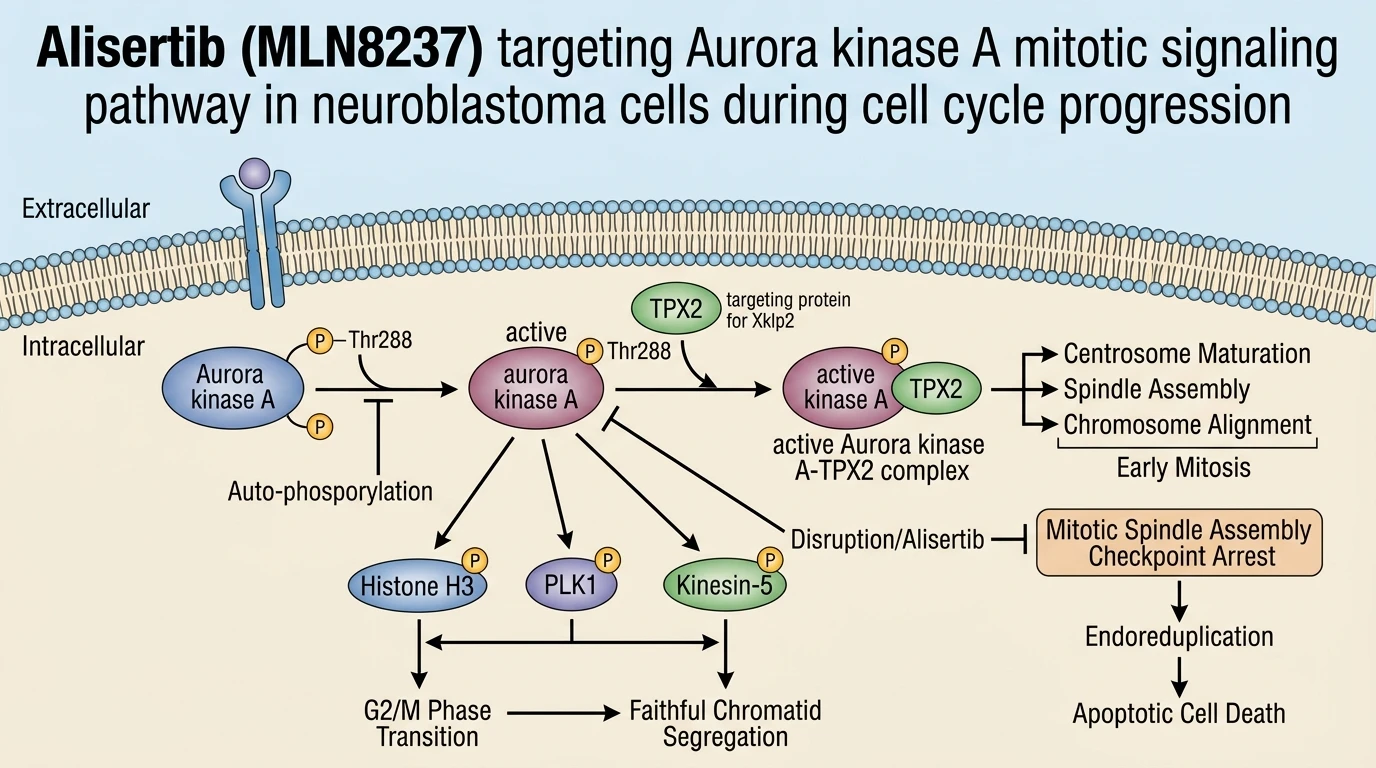
Targeted inhibition of mitotic kinases represents an established therapeutic strategy in pediatric and adult oncology. Among these targets, Aurora kinase A functions as a central regulator of centrosome duplication, spindle bipolarity, and chromosome alignment during the G2/M phase transition. Overexpression of Aurora kinase A frequently correlates with aneuploidy, aggressive tumor phenotypes, and poor clinical prognosis in neuroblastoma and epithelial malignancies. Small-molecule inhibitors designed to bind the ATP-binding pocket of Aurora kinase A interrupt auto-phosphorylation at residue Thr288, arresting malignant cells in mitosis and subsequently inducing caspase-dependent apoptosis.
However, the durable efficacy of targeted kinase inhibitors is frequently compromised by ATP-binding cassette (ABC) efflux transporters. These transmembrane proteins actively pump lipophilic xenobiotics out of the cytoplasm, thereby reducing intracellular drug accumulation below therapeutic thresholds. Breast cancer resistance protein (BCRP/ABCG2), a key member of the ABC transporter superfamily, is frequently upregulated in refractory tumor populations and stem-like neuroblastoma sub-clones. Consequently, evaluating whether novel kinase inhibitors serve as transport substrates for ABCG2 is critical for predicting clinical resistance patterns.
Recent pharmacological evaluations systematically investigated the efflux susceptibility of first- and second-generation Aurora kinase inhibitors in neuroblastoma cell models. Specifically, studies analyzed the comparative cytotoxic profiles of tozasertib (VX-680) and Alisertib (MLN8237) within parental neuroblastoma lines (UKF-NB-3) and their engineered ABCG2-overexpressing sublines (UKF-NB-3ABCG2).
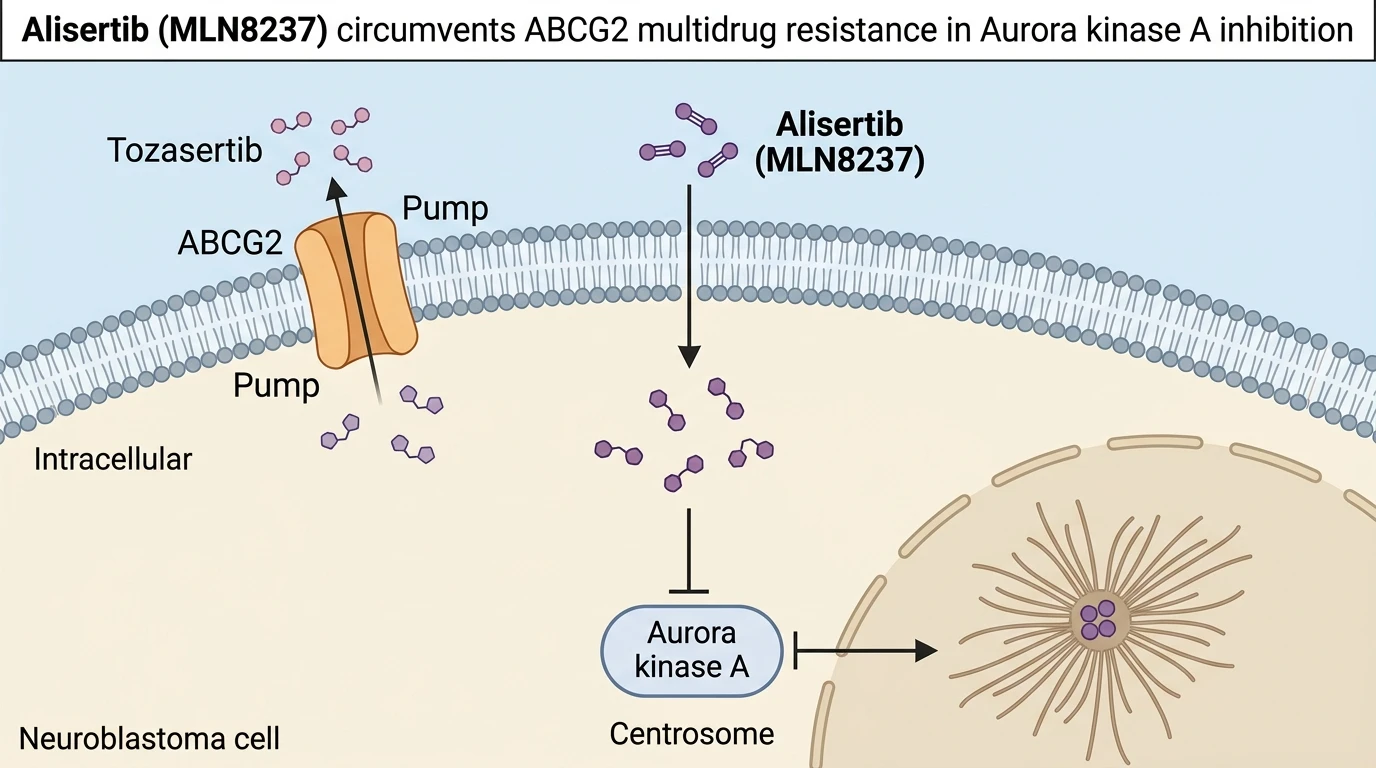
In ABCG2-overexpressing UKF-NB-3ABCG2 cells, tozasertib displayed a profound loss of antiproliferative activity. The half-maximal inhibitory concentration (IC50) for tozasertib increased 48.8-fold compared to the parental cell line. This substantial shift confirms that tozasertib acts as a high-affinity substrate for the ABCG2 transporter, which actively extrudes the drug from the intracellular compartment. Pharmacological co-administration of the specific ABCG2 inhibitor WK-X-34 fully restored tozasertib cytotoxicity, shifting the IC50 back to baseline levels. Similarly, genetic knockdown of ABCG2 via short hairpin RNA (shRNA) completely re-sensitized the refractory cells to tozasertib exposure.
In stark contrast, Alisertib (MLN8237) maintained uncompromised potency regardless of ABCG2 expression status. The cytotoxic IC50 values for Alisertib (MLN8237) were virtually identical between parental UKF-NB-3 cells and ABCG2-overexpressing UKF-NB-3ABCG2 cells. Furthermore, co-treatment with the ABCG2 inhibitor WK-X-34 or shRNA-mediated gene silencing produced no significant change in the antiproliferative profile of Alisertib (MLN8237).
These empirical observations demonstrate that Alisertib (MLN8237) is not a substrate for the ABCG2 multidrug transporter. By evading transporter-mediated efflux, Alisertib (MLN8237) maintains required intracellular concentrations necessary for sustained Aurora kinase A inhibition. This biochemical immunity to ABCG2 efflux provides a distinct pharmacological advantage in neuroblastoma models exhibiting multidrug resistant phenotypes.
Pharmacological Refractory Resistance and Transporter Substrate Profiling
Copy code to add this image to your page
Alisertib (MLN8237) is a selective inhibitor of Aurora kinase A that disrupts centrosome maturation and mitotic spindle assembly during cell division. Unlike first-generation inhibitors such as tozasertib, Alisertib (MLN8237) is not a substrate for the multidrug efflux transporter ABCG2. Consequently, its antiproliferative efficacy remains unattenuated in ABCG2-overexpressing neuroblastoma models.
Comparative Cytotoxicity in ABCG2-Overexpressing Neuroblastoma Sublines
Multidrug resistance poses a persistent obstacle during high-risk neuroblastoma chemotherapy. The ATP-binding cassette transporter ABCG2 actively extrudes diverse structural classes of small-molecule therapeutics. In cell-based viability assays using the UKF-NB-3ABCG2 model, tozasertib exhibited a striking 48.8-fold IC50 elevation relative to wild-type controls. Intracellular drug accumulation plummeted rapidly. Conversely, the antiproliferative activity of Alisertib (MLN8237) remained entirely unchanged despite robust transporter expression. Cellular sensitivity persisted across tight nanomolar concentration ranges. These empirical findings indicate that chemical modifications within second-generation Aurora inhibitors alter transporter binding affinity—effectively preventing drug extrusion.
Transporter Inhibition and Gene Knockdown Confirm Substrate Selectivity
To confirm transporter specificity, researchers targeted ABCG2 through pharmacological and genetic interventions. Small-molecule inhibition using WK-X-34 completely reversed tozasertib resistance within hours. Similarly, shRNA-mediated depletion of ABCG2 restored full sensitivity in refractory cells. Neither intervention modified the killing kinetics of Alisertib (MLN8237). Downstream mitotic arrest continued uninterrupted. These parallel validation experiments establish that Alisertib (MLN8237) operates independently of ABCG2-mediated efflux pathways under tested in vitro conditions.