Mechanosensitive Channel Inhibitors
Mechanosensitive (MS) channels are a diverse family of ion channels that transduce mechanical stimuli, such as stretch, pressure, shear stress, and membrane tension, into electrochemical signals. These channels are integral to cellular mechanotransduction, converting physical forces into biological responses. Key families of MS channels include the Piezo channels (Piezo1, Piezo2), certain Transient Receptor Potential (TRP) channels (e.g., TRPV4, TRPC1), and two-pore domain potassium channels (K2P). Their mechanism of action typically involves conformational changes in response to membrane deformation, leading to the opening or closing of the ion pore and subsequent ion flux (e.g., Ca2+, Na+, K+). This ion movement alters membrane potential and triggers downstream signaling cascades, including calcium-dependent pathways, MAPK pathways, and cytoskeletal remodeling, thereby regulating fundamental cellular processes such as cell volume control, proliferation, differentiation, and migration. Dysregulation of MS channel function is implicated in a wide array of human diseases. In the cardiovascular system, aberrant MS channel activity contributes to hypertension, cardiac hypertrophy, atherosclerosis, and arrhythmias by influencing vascular tone, endothelial function, and cardiomyocyte signaling. Neurological disorders, including chronic pain syndromes (neuropathic pain, mechanical allodynia), traumatic brain injury, and certain neurodegenerative conditions, are linked to altered mechanosensation in neurons and glial cells. Renal diseases, such as polycystic kidney disease and acute kidney injury, involve abnormal mechanotransduction in kidney tubules and glomeruli.
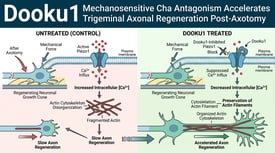
Furthermore, MS channels play critical roles in the tumor microenvironment, influencing cancer cell proliferation, invasion, metastasis, and drug resistance in various malignancies, including breast, prostate, and lung cancers. Other conditions like asthma, pulmonary hypertension, and irritable bowel syndrome also show associations with MS channel dysfunction. Research into MS channel inhibitors is predominantly in the preclinical stage, with a growing number of compounds showing promise. No MS channel inhibitors are currently approved as primary therapeutic agents, but several are being investigated. Gadolinium and ruthenium red are classic, non-selective MS channel blockers used as research tools, but their lack of specificity limits therapeutic application. More recently, specific inhibitors for Piezo channels have emerged, such as GsMTx4 (a tarantula venom peptide that blocks multiple MS channels, including Piezo1) and Dooku1 (a small molecule Piezo1 inhibitor). Other compounds like HC-067047 (TRPV4 inhibitor) are also under investigation. The development of highly selective small molecule inhibitors for specific MS channel subtypes is a major focus, with several compounds advancing through lead optimization and early animal studies for indications like chronic pain, fibrosis, and cancer. The field is rapidly evolving, driven by a deeper understanding of individual MS channel structures and functions.
MS channel inhibitors are commonly classified by the specific channel subtype they target (e.g., Piezo1 inhibitors, TRPV4 inhibitors) and by their mechanism of action (e.g., pore blockers, gating modifiers that stabilize closed or open states). They can also be categorized by their chemical structure (e.g., peptide toxins, small molecules). The challenge of achieving selectivity across the diverse MS channel family is significant, as many channels share structural homologies or are co-expressed in various tissues. This necessitates the development of highly specific compounds to avoid off-target effects and ensure a favorable safety profile. Key challenges in developing MS channel inhibitors include the ubiquitous expression of some channels, which raises concerns about systemic toxicity, and the potential for redundancy or compensatory mechanisms among different MS channels. Achieving tissue-specific delivery or targeting channels with restricted expression patterns could mitigate these issues. Research tools, including genetic knockout models, optogenetic and chemogenetic approaches, and advanced imaging techniques, are crucial for dissecting the roles of individual MS channels. Combination therapy strategies are being explored, particularly in cancer, where MS channel inhibitors could sensitize tumor cells to chemotherapy or radiation, or in pain management, where they might be combined with conventional analgesics to enhance efficacy and reduce side effects. Further understanding of the precise physiological roles of each MS channel subtype is essential for successful therapeutic translation.