PTEN Inhibitors
PTEN (Phosphatase and tensin homolog) is a critical tumor suppressor protein that functions primarily as a lipid phosphatase. Its most significant role is the dephosphorylation of phosphatidylinositol (3,4,5)-trisphosphate (PIP3) to phosphatidylinositol (4,5)-bisphosphate (PIP2). By reducing the cellular levels of PIP3, PTEN directly antagonizes the phosphoinositide 3-kinase (PI3K)/AKT/mTOR signaling pathway, which is a central regulator of cell growth, proliferation, survival, and metabolism. When PTEN function is lost or diminished, the PI3K pathway becomes constitutively active, leading to uncontrolled cellular growth and oncogenesis. Beyond its lipid phosphatase activity, PTEN also possesses protein phosphatase activity and nuclear functions that contribute to genomic stability and cell cycle regulation. The clinical significance of PTEN is most prominently observed in oncology. PTEN is one of the most frequently mutated or deleted genes in human cancers, including prostate, endometrial, glioblastoma, and breast carcinomas. PTEN loss is often associated with advanced disease stages, poor prognosis, and resistance to conventional therapies.
However, the therapeutic interest in PTEN inhibitors is somewhat counterintuitive given its role as a tumor suppressor. Instead of treating cancer, PTEN inhibitors are primarily explored for regenerative medicine and metabolic disorders. For instance, PTEN inhibition has shown promise in promoting axonal regeneration after central nervous system injuries, such as spinal cord injury or optic nerve damage, where the PI3K/AKT pathway needs to be reactivated to support neuronal growth. Additionally, PTEN inhibitors are investigated for their potential to enhance insulin sensitivity in type 2 diabetes and to protect against myocardial ischemia-reperfusion injury. Current research progress on PTEN inhibitors has led to the identification of several small-molecule compounds. These are generally classified into vanadium-based inorganic compounds and non-vanadium organic inhibitors. Early inhibitors like bisperoxovanadium (bpV) complexes, such as bpV(phen) and bpV(pic), are potent but lack high specificity and exhibit significant toxicity. More recently, more selective organic inhibitors like VO-OHpic and SF1670 have been developed.
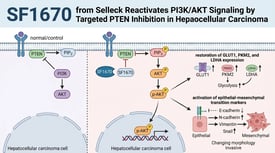
VO-OHpic is frequently used as a tool compound in preclinical studies to evaluate the effects of transient PTEN inhibition on tissue repair and glucose metabolism. SF1670 is another widely used research tool that targets the PTEN pleckstrin homology domain, effectively increasing PIP3 levels and downstream AKT signaling. Despite the potential benefits in regenerative medicine, the development of PTEN inhibitors faces substantial challenges. The most significant concern is the risk of inducing oncogenic transformation, as long-term inhibition of a major tumor suppressor could lead to cancer development. Therefore, therapeutic strategies focus on transient or localized inhibition rather than systemic, chronic administration. Current clinical trials are limited, with most research remaining in the preclinical stage. Moreover, the structural characterization of the PTEN active site has facilitated the design of allosteric modulators that could potentially offer a more nuanced control over its phosphatase activity compared to traditional orthosteric inhibitors. Future directions involve the development of highly selective, reversible inhibitors and the exploration of combination therapies that can harness the regenerative potential of PTEN inhibition while mitigating the risks of tumorigenesis.