Mitomycin C DNA Cross-Linking for Fibroblast Inhibition in Glaucoma Surgery
Copy code to add this image to your page
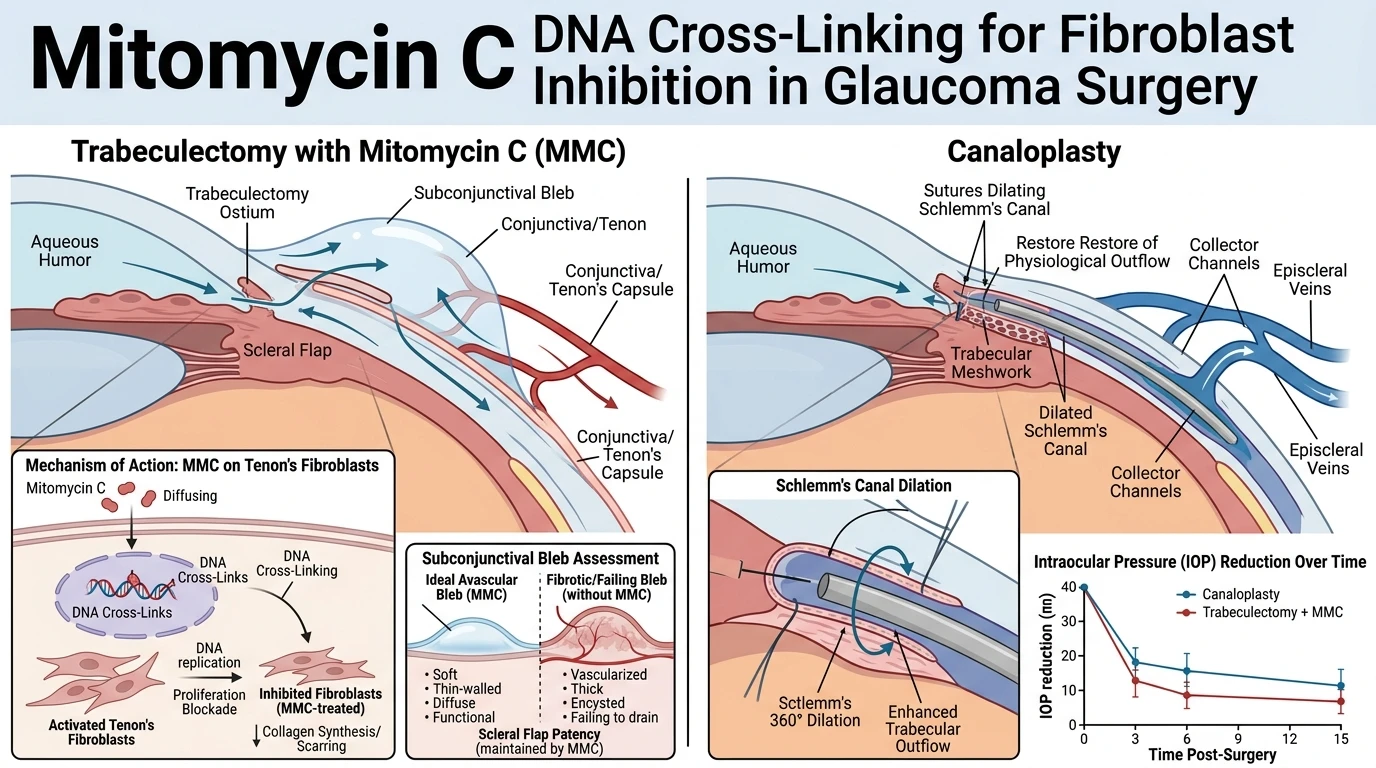
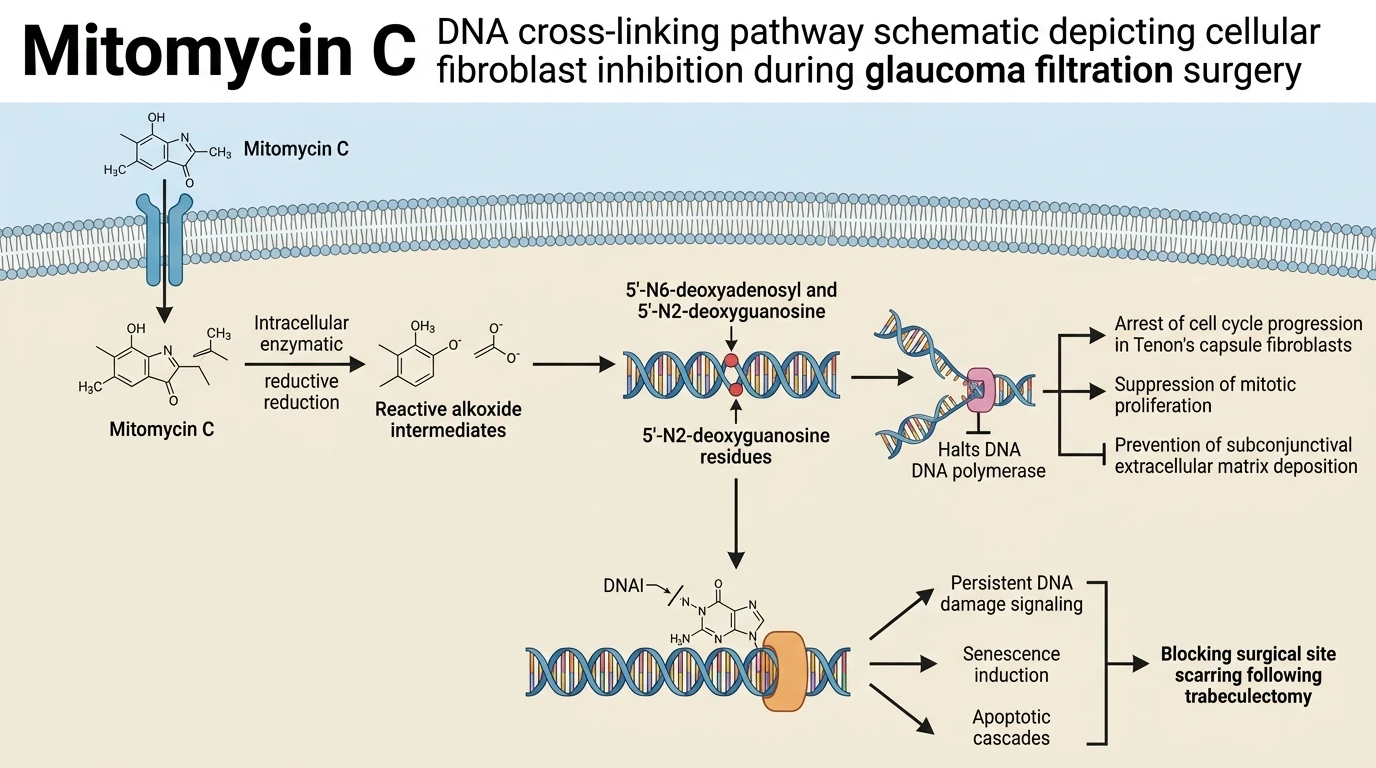
Mitomycin C functions as a potent bioreductive alkylating agent that targets macromolecular DNA to arrest cellular division. Intracellular activation requires reduction via enzymatic pathways—primarily NADPH:quinone oxidoreductase 1 (NQO1) and cytochrome P450 reductases—yielding transient, highly reactive bis-electrophilic intermediates. These reactive species execute alkylation at the C-9 and C-10 positions, forming covalent adducts with N2-deoxyguanosine residues in the minor groove of double-stranded DNA. Bi-functional engagement generates interstrand DNA cross-links that structurally lock opposing helical strands. The resulting topological barrier halts replication fork advancement during S-phase and triggers stalled transcription complexes. In Tenon's capsule subconjunctival fibroblasts, this targeted DNA lesion prevents mitotic division, induces irreversible cell cycle arrest, and downregulates extracellular matrix synthesis. Researchers evaluating genomic stability employ quantitative DNA damage tracking protocols to measure covalent cross-link density across proliferative cell populations.
In ophthalmic surgical interventions, specifically glaucoma filtration procedures, subconjunctival scarring represents the primary cause of long-term failure. Surgical trauma from trabeculectomy triggers local inflammation, promoting fibroblast proliferation, migration, and collagen deposition that obstructs the newly created scleral fistula. Localized intraoperative application of Mitomycin C serves as an antimetabolic strategy to suppress Tenon fibroblast proliferation within the subconjunctival space. By preventing dense fibrous tissue formation over the episcleral bleb, the agent maintains persistent aqueous humor outflow, thereby establishing sustained reductions in intraocular pressure (IOP).
Clinical management of primary open-angle glaucoma (POAG) increasingly compares traditional filtration procedures against non-penetrating or canal-based microinvasive glaucoma surgeries. Trabeculectomy supplemented with topically applied Mitomycin C remains the benchmark for maximum IOP reduction. Conversely, canaloplasty offers an ab-externo circumferential viscocanalostomy designed to restore natural trabecular outflow pathways without creating a permanent subconjunctival bleb. Evaluating the long-term pharmacodynamic utility of trabeculectomy with MMC against canaloplasty requires rigorous longitudinal cohort comparative studies assessing pressure lowering, medication burden, surgical complications, and demographic failure determinants.
A 2-year longitudinal cohort study systematically analyzed surgical outcomes comparing canaloplasty and trabeculectomy augmented with Mitomycin C in eyes diagnosed with primary open-angle glaucoma. Over the 24-month monitoring interval, both interventions produced statistically significant reductions in mean intraocular pressure relative to baseline. However, trabeculectomy with MMC demonstrated superior efficacy in magnitude of IOP reduction, achieving a mean drop of -12.2 mmHg compared to -4.7 mmHg observed in the canaloplasty arm (P = 0.003). The absolute mean IOP at 2 years was similarly lower following trabeculectomy (12.2 mmHg) than after canaloplasty (14.9 mmHg, P = 0.03). This enhanced hypotensive potency translated directly to a reduced post-operative therapeutic burden; patients receiving trabeculectomy required a median of 0 ocular hypotensive medications at 2 years, whereas canaloplasty recipients required a median of 2 medications (P = 0.02).
Despite the enhanced pressure-lowering potency provided by Mitomycin C-augmented trabeculectomy, overall surgical failure rates at 2 years did not differ significantly between cohorts (32% for trabeculectomy vs. 26% for canaloplasty, P = 0.6). The comparable failure rates reflect distinct safety profiles and post-operative course trajectories. Trabeculectomy with MMC was associated with a markedly higher incidence of post-operative interventions to manage bleb-related complications (70% vs. 39%, P = 0.01). The intense anti-fibrotic action of MMC—while effective at sustaining pressure reduction—increases the risk of avascular blebs, hypotony, and bleb leaks requiring secondary surgical revisions or laser suturolysis. Additionally, race emerged as a major independent determinant of surgical longevity; pigmented patient populations experienced significantly higher overall failure rates than Caucasian patients across both surgical procedures. This observation highlights demographic variations in subconjunctival wound healing responses and wound remodeling kinetics following surgical trauma.
Comparative Surgical Outcomes and Pharmacological Efficacy
Copy code to add this image to your page
Mitomycin C acts as an alkylating prodrug that undergoes intracellular enzymatic bioreduction to generate reactive DNA-crosslinking intermediates. Upon activation, the compound covalently binds deoxyguanosine residues within DNA, forming interstrand cross-links that halt replication forks and block cellular division. In glaucoma filtration surgery, this anti-metabolic action selectively suppresses subconjunctival Tenon capsule fibroblast proliferation and extracellular matrix synthesis. Inhibiting wound healing preserves surgical bleb patency, significantly lowering intraocular pressure over extended post-operative follow-up periods.
Trabeculectomy with Mitomycin C Achieves Superior Pressure Reduction
Trabeculectomy achieved robust ocular hypotensive control. In this longitudinal primary open-angle glaucoma cohort, trabeculectomy supplemented with adjunctive Mitomycin C induced a mean intraocular pressure reduction of 12.2 mmHg. Canaloplasty yielded modest hypotensive responses. Patients undergoing canaloplasty recorded a mean pressure drop of only 4.7 mmHg over the 2-year monitoring timeframe (P = 0.003). Ocular medication dependency dropped significantly. Postoperative regimens required a median of zero medications for trabeculectomy—compared with two agents for canaloplasty procedures (P = 0.02). Total failure rates remained equivalent. Despite disparate pressure drops, overall 2-year failure rates between canaloplasty (26%) and trabeculectomy (32%) demonstrated no statistically significant difference (P = 0.6).
Elevated Postoperative Interventions and Racial Outcome Disparities
Postoperative complications required frequent surgical management. Trabeculectomy procedures prompted secondary intervention in 70% of eyes, whereas canaloplasty triggered interventions in 39% of cases (P = 0.01). Bleb management drove intervention frequency. Anti-fibrotic potency suppresses subconjunctival healing—a mechanism that predisposes eyes to hypotony, bleb leaks, and subsequent revision procedures. Demographics strongly influenced overall failure rates. Pigmented patient cohorts exhibited significantly higher surgical failure rates across both operative modalities when evaluated alongside Caucasian counterparts. Tissue responses vary among populations. Differential wound healing kinetics suggest that subconjunctival fibroblast reactivity dictates long-term surgical success across diverse patient demographics.