Cyclosporin A and Calcineurin Signaling in Cardiac Surgery-Associated Acute Kidney Injury Pathophysiology
Copy code to add this image to your page
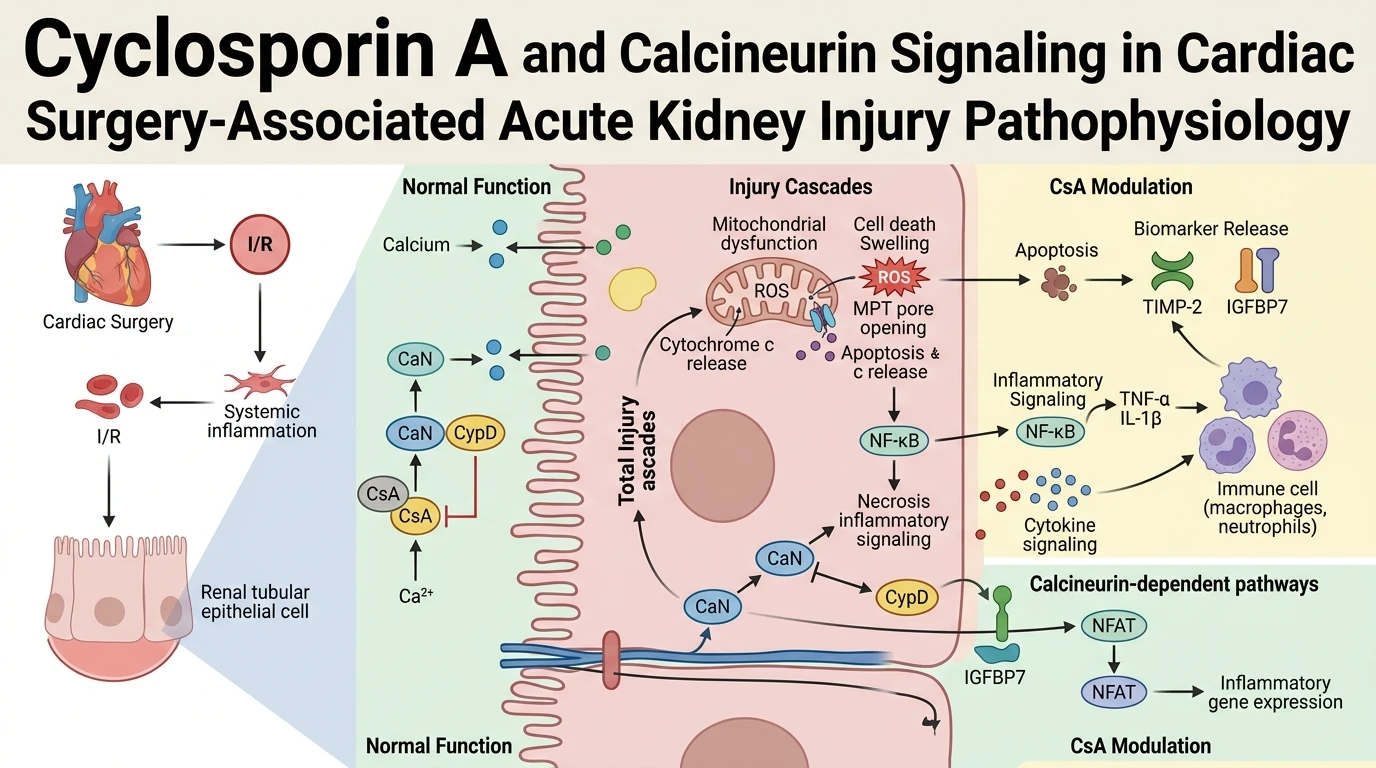
Cardiac surgery-associated acute kidney injury represents a frequent perioperative complication occurring following cardiopulmonary bypass and major aortic procedures. While historical literature frequently evaluates the immunosuppressive agent Cyclosporin A in calcineurin-mediated nephrotoxicity models, critical examination of clinical synthesis literature requires distinguishing pharmaceutical entities from acronyms such as CSA-AKI (Cardiac Surgery-Associated Acute Kidney Injury). In contemporary cardiovascular surgery, acute renal decompensation affects up to thirty percent of patients undergoing procedures requiring extracorporeal circulation. The pathophysiological framework of this acute injury encompasses hemodynamic instability, systemic inflammatory response activation, oxidative stress generation, and nephrotoxic exposures during cardiopulmonary bypass operations.
During cardiopulmonary bypass, pulsatile renal perfusion is replaced by non-pulsatile flow, inducing renal medullary hypoxia and microvascular constriction. Intracorporeal blood exposure to artificial bypass circuits triggers complement cascade activation, cytokine release (including interleukin-6 and tumor necrosis factor-alpha), and leukocyte recruitment into the renal parenchymal tissue. Simultaneously, hemolysis and red blood cell fragmentation release free hemoglobin into circulation, scavenging nitric oxide and precipitating tubulointerstitial vasoconstriction. Reperfusion following cross-clamp removal generates reactive oxygen species that induce lipid peroxidation within renal tubular epithelial cell membranes, compromising mitochondrial membrane integrity.
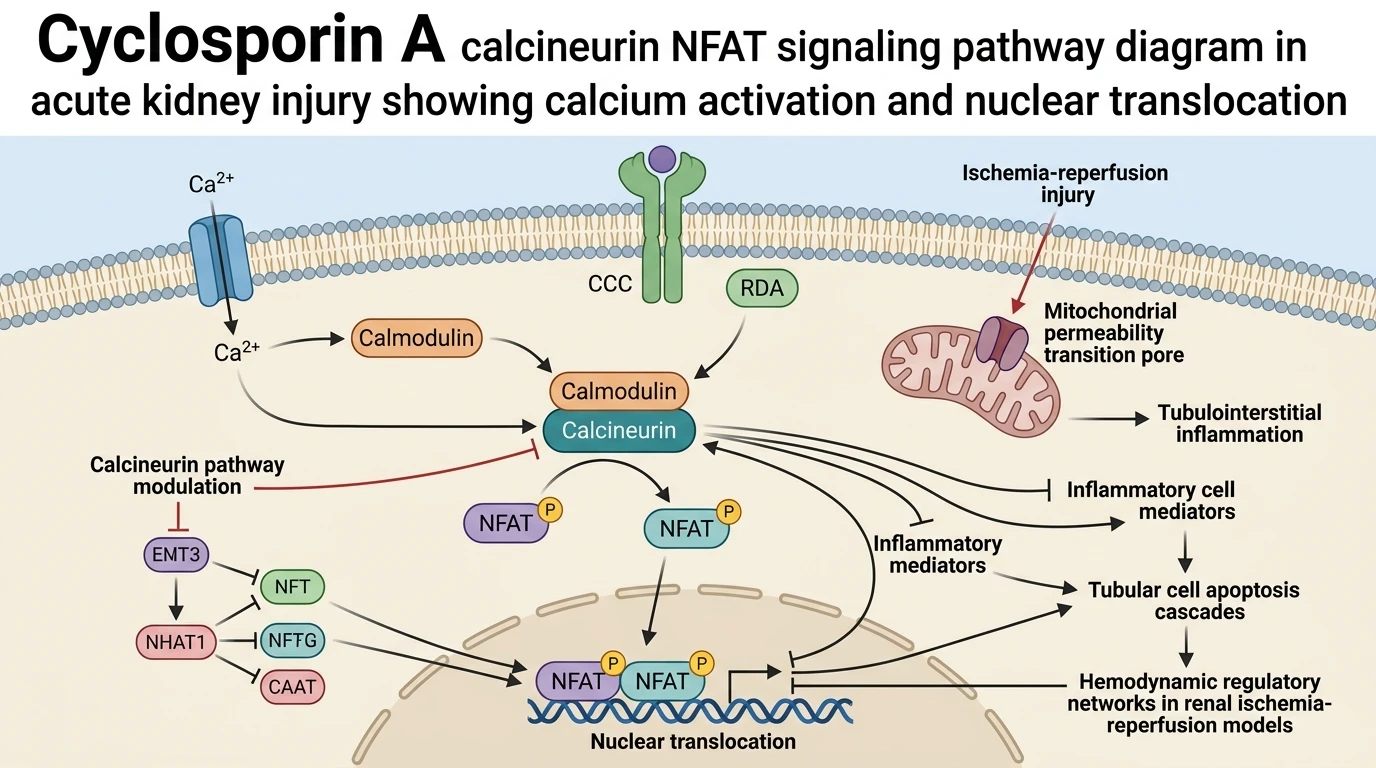
Although classic immunosuppressive protocols utilizing Cyclosporin A target calcineurin to suppress nuclear factor of activated T-cells (NFAT) dephosphorylation in immune cells, acute kidney injury following cardiac surgery primarily involves ischemic tubular necrosis rather than immune-mediated graft rejection cascades. In tubular epithelial cells under ischemic stress, cytosolic calcium surges activate intracellular proteases and phospholipases, contributing to cell death through apoptotic and necroptotic pathways. Understanding whether agents like Cyclosporin A exert protective or detrimental effects on mitochondrial permeability transition pore opening under clinical ischemia-reperfusion remains an area of ongoing investigation.
Diagnostic evaluation of postoperative acute kidney injury historically depended on serum creatinine elevations and urine output decrements defined by KDIGO criteria. However, serum creatinine is a delayed functional marker that rises twenty-four to forty-eight hours after initial structural parenchymal injury. Consequently, clinical research focuses on early diagnostic novel biomarkers. Tissue inhibitor of metalloproteinases-2 (TIMP-2) and insulin-like growth factor-binding protein 7 (IGFBP7) serve as functional indicators of tubular cell G1 cell-cycle arrest. Additional novel markers include neutrophil gelatinase-associated lipocalin (NGAL) and kidney injury molecule-1 (KIM-1), both of which elevate within hours of perioperative insults.
Clinical management of cardiac surgery-associated acute kidney injury relies on supportive strategies and care bundles rather than specific pharmacological remedies. Implementing high-risk care bundles, such as optimization of cardiac output, avoidance of nephrotoxic medications, glycemic control, and strict hemodynamic monitoring based on early biomarker triage, demonstrates measurable reductions in severe kidney injury occurrence. In cohorts undergoing complex valve or aortic reconstructions, early initiation of continuous renal replacement therapy stabilizes fluid balance and metabolic derangements, though optimal timing parameters remain subject to clinical trial validation.
Patient outcomes following postoperative kidney injury reveal substantial long-term morbidity and mortality. Long-term observational cohorts demonstrate that even transient postoperative acute kidney injury significantly accelerates progression toward chronic kidney disease and end-stage renal failure. Elevated perioperative serum creatinine or positive biomarker signatures correlate with extended intensive care unit duration, prolonged mechanical ventilation, and increased thirty-day mortality rates. Furthermore, the healthcare costs associated with perioperative kidney injury remain substantial, adding significant expenditure per patient encounter due to extended hospitalization, diagnostic testing, fluid management protocols, and renal replacement modalities. Addressing these multi-factorial risks requires integrated clinical care pathways, aggressive risk stratification before surgery, and tailored hemodynamic management strategies throughout the operative and postoperative recovery periods.
Pathophysiological Mechanisms and Clinical Management of Cardiac Surgery-Associated Acute Kidney Injury
Copy code to add this image to your page
Cardiac surgery-associated acute kidney injury arises from multifactorial mechanisms, primarily ischemia-reperfusion injury, systemic inflammation, oxidative stress, and hemodynamic instability. Tubular cell damage leads to impaired glomerular filtration. Biomarkers like TIMP-2*IGFBP7 enable early detection, guiding bundled care interventions to mitigate renal function loss.
Ischemia-Reperfusion Cascades and Tubular Cell Death Patterns
Renal hypoperfusion during cardiopulmonary bypass induces immediate cellular hypoxia within the outer medulla. Tubular cells undergo rapid ATP depletion. Intracellular sodium accumulation causes cellular swelling, triggering membrane damage and cell necrosis. Concurrently, reperfusion generates excess superoxide radicals within the mitochondrial matrix. These reactive oxygen species trigger opening of the mitochondrial permeability transition pore, causing loss of membrane potential—a process historically studied in relation to Cyclosporin A and cyclophilin D interactions. Downstream apoptotic signaling proceeds via cytochrome c release and caspase-3 activation. In human biopsy models, proximal tubule loss predominates.
Biomarker-Driven Diagnostics and Multimodal Bundled Care Protocols
Early identification of structural kidney injury relies on cell-cycle arrest markers TIMP-2 and IGFBP7. Urinalysis reveals elevations in these proteins prior to functional creatinine changes. In prospective surgical cohorts, elevated urinary biomarker values trigger immediate initiation of standardized KDIGO bundle interventions. Fluid resuscitation maintains adequate mean arterial pressure. Vasopressor therapy restores renal perfusion pressure without excessive systemic vasoconstriction. Nephrotoxic agent administration ceases immediately. In clinical context, evaluating pharmacological interventions such as Cyclosporin A requires clear distinction between calcineurin-mediated immunosuppression and acute ischemic tubular injury mechanisms.
Economic Impacts and Long-Term Renal Function Trajectories
Acute kidney injury significantly impairs long-term survival following open-heart procedures. Persistent tubular damage promotes interstitial fibrosis and chronic renal decline. Patients requiring renal replacement therapy exhibit higher long-term cardiovascular mortality. Healthcare financial expenditures scale directly with injury severity stages. Extended intensive care stays drive direct medical costs higher. Implementing targeted perioperative bundles reduces overall clinical resource utilization.