MMAE (Monomethyl auristatin E) ADC Cytotoxin inhibitor Disrupts β-Tubulin Polymerization Dynamics
Copy code to add this image to your page
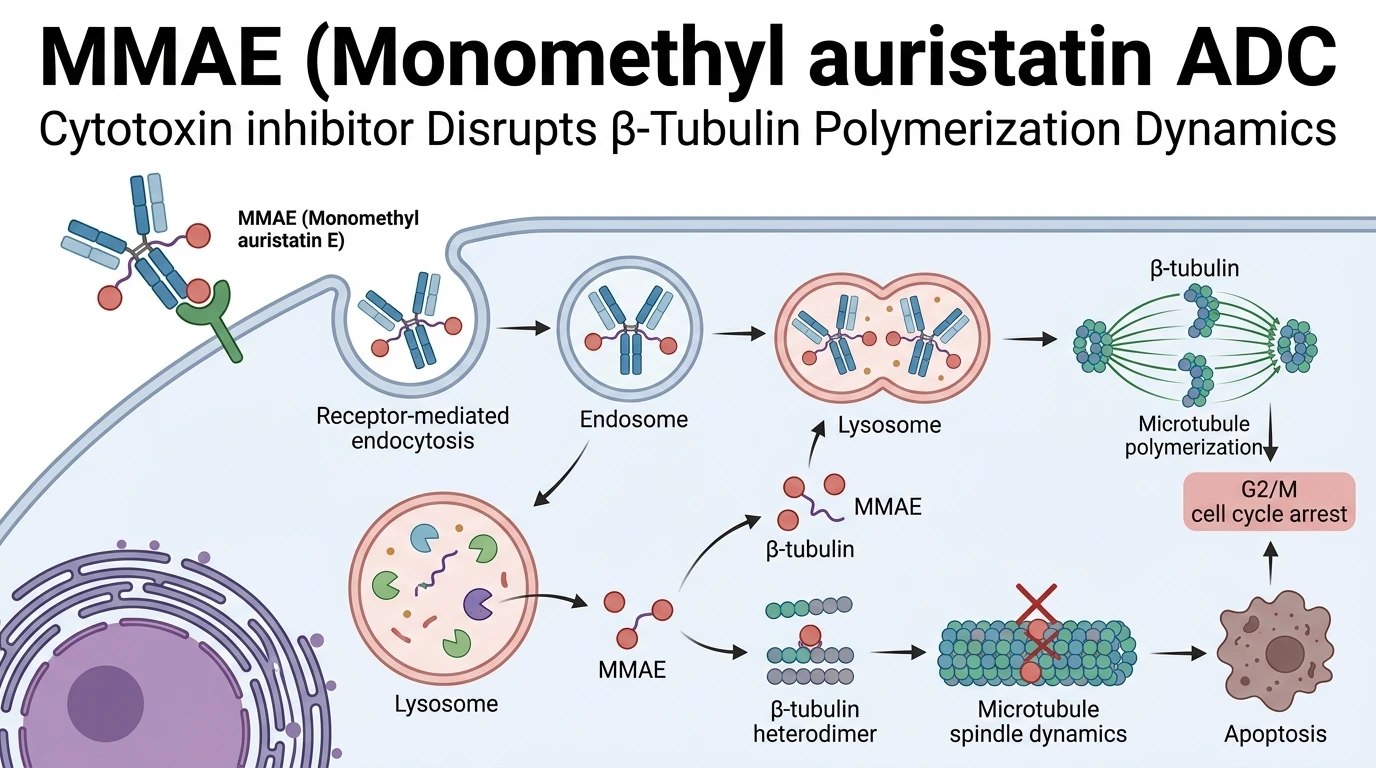
MMAE (Monomethyl auristatin E) represents a synthetic derivative of dolastatin 10, a naturally occurring pentapeptide originally isolated from the marine mollusk Dolabella auricularia. Through strategic chemical modification, MMAE retains the potent antimitotic properties of its parent compound while offering functional sites for chemical conjugation. The principal biochemical target of MMAE is β-tubulin, an essential structural protein that heterodimerizes with α-tubulin to constitute the cellular microtubule network. Under physiological conditions, microtubules undergo rapid assembly and disassembly—a phenomenon termed dynamic instability—which is mandatory for intracellular transport, structural integrity, and the execution of mitosis. Upon entering the cytoplasm, MMAE binds directly to the peptide-binding region of β-tubulin adjacent to the vinca domain. This binding event sterically hinders the addition of GTP-bound tubulin heterodimers to the growing positive ends of microtubules. Consequently, microtubule elongation halts entirely, and existing microtubule structures destabilize.
The disruption of microtubule dynamics by MMAE halts mitotic spindle formation during cell division. In cultured carcinoma models, exposure to sub-nanomolar concentrations of free MMAE forces cells to arrest at the G2/M phase boundary. Deprived of a functional mitotic spindle, the spindle assembly checkpoint remains persistently engaged, delaying entry into anaphase. Prolonged mitotic arrest initiates apoptotic signaling cascades mediated by the phosphorylation of Bcl-2 family proteins, cytochrome c release from the mitochondria, and subsequent activation of initiator and executioner caspases (caspase-9 and caspase-3/7, respectively). Comprehensive protein interaction network analysis underscores how β-tubulin engagement propagates stress responses across multiple downstream signaling hubs, culminating in systematic cell death.
Despite its high cytotoxic potency, unconjugated MMAE lacks cellular selectivity, resulting in narrow systemic tolerance and significant off-target toxicities in vivo. To harness its antitumor potency effectively, MMAE is engineered as the cytotoxic payload within antibody-drug conjugates (ADCs). In these structures, MMAE is covalently attached to tumor-targeting monoclonal antibodies via stable linkers, such as the cathepsin B-cleavable valine-citrulline (val-cit) dipeptide. Upon binding to specific surface antigens—such as CD30 in Hodgkin lymphoma or systemic anaplastic large cell lymphoma—the ADC undergoes receptor-mediated endocytosis. Internalized vesicles fuse with lysosomes, where lysosomal proteases selectively hydrolyze the linker, releasing fully active, free MMAE inside the target cell cytosol. This target-dependent mechanism drastically restricts systemic exposure, widening the therapeutic window and permitting the clinical success exemplified by therapeutics like brentuximab vedotin.
Pharmacological Evaluation and Targeted Cytotoxic Mechanics
Copy code to add this image to your page
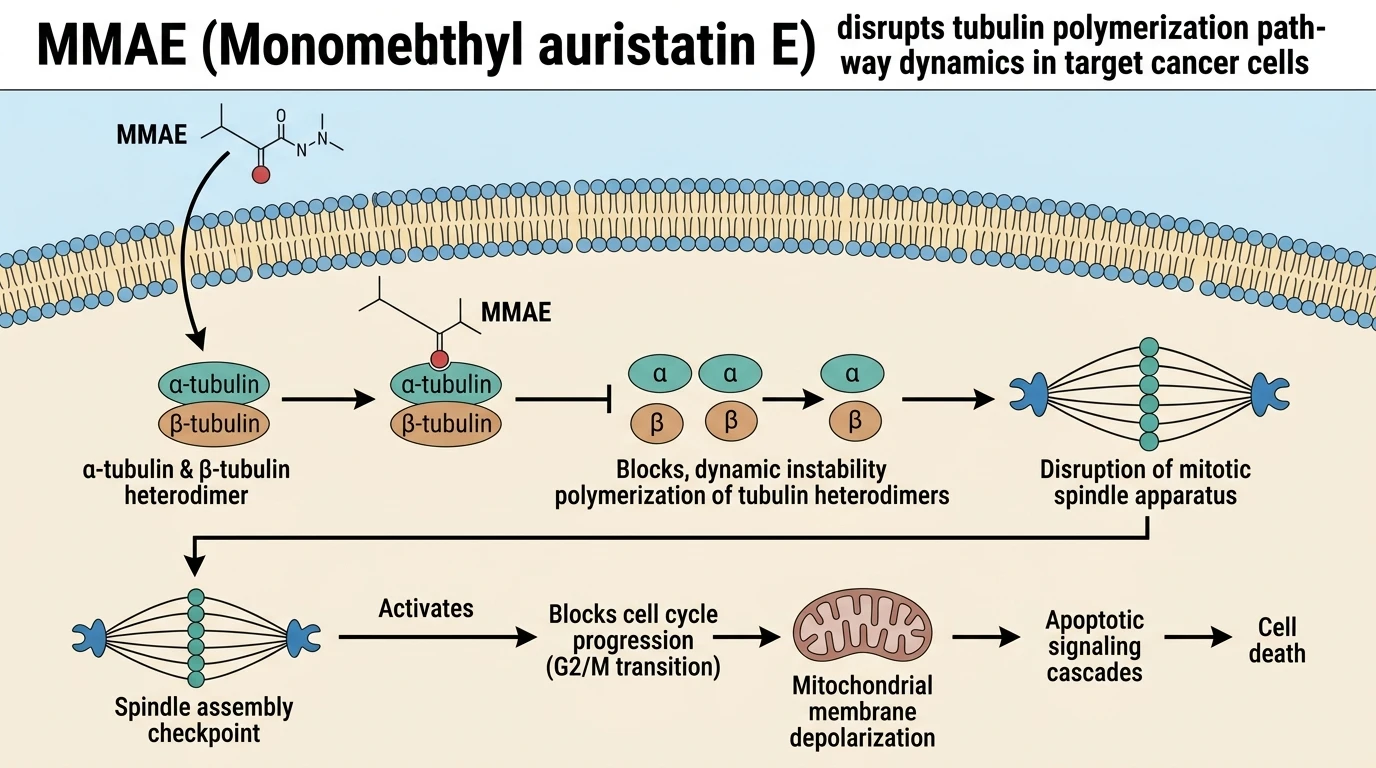
MMAE inhibits tubulin polymerization by binding β-tubulin with nanomolar affinity. This binding event halts microtubule dynamic instability, preventing proper mitotic spindle formation during cell division. Consequently, cells stall at the G2/M phase, initiating caspase-dependent apoptotic pathways. When conjugated to monoclonal antibodies via valyl-citrulline linkers, the active payload is delivered specifically to target-bearing cancer cells, where lysosomal proteases release free MMAE to exert targeted cytotoxic activity.
Suppression of Microtubule Dynamics Drives G2/M Phase Arrest
Inhibition of tubulin polymerization occurs through precise binding interactions between MMAE and β-tubulin heterodimers. Tubulin assembly halted rapidly in cell-free assembly assays at low micromolar concentrations. Dynamic equilibrium shifts completely away from polymer formation. In human lymphoma cell lines, treatment with free MMAE suppresses microtubule turnover within 2 hours. Mitotic arrest persisted through sustained activation of the spindle assembly checkpoint. Analytical flow cytometry revealed a sharp accumulation of cells exhibiting 4N DNA content. Mitotic catastrophe rapidly ensues. Short exposure times triggered marked loss of mitochondrial membrane potential, confirming rapid transition from cell cycle arrest to irreversible apoptotic cell death.
Cleavable Linker Conjugation Enhances Target-Specific Intracellular Delivery
Direct administration of unconjugated payload results in severe neutropenia and peripheral neuropathy. To prevent premature release in circulation, the MMAE (Monomethyl auristatin E) ADC Cytotoxin inhibitor utilizes a stable valine-citrulline dipeptide linker attached to a monoclonal antibody payload delivery system. Plasma stability assays demonstrated minimal spontaneous hydrolysis over 72 hours. Target engagement remained intact. Upon uptake into CD30-positive cells, lysosomal cathepsin B cleaves the dipeptide bond cleanly. High intracellular concentrations of active MMAE accumulate rapidly. Surrounding antigen-negative cells undergo bystander killing due to the membrane-permeable nature of neutral MMAE. Selectivity margins remained broad across multiple xenograft models.