ATP-citrate lyase Inhibitors
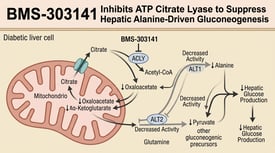
ATP-citrate lyase (ACLY) is a key metabolic enzyme that sits at the crossroads of carbohydrate and lipid metabolism. It catalyzes the conversion of citrate and coenzyme A (CoA) into acetyl-CoA and oxaloacetate, utilizing the energy from ATP hydrolysis. This reaction is the primary source of cytosolic acetyl-CoA, which serves as a fundamental building block for the de novo synthesis of fatty acids and cholesterol. Furthermore, the acetyl-CoA produced by ACLY is a critical substrate for histone acetylation, thereby linking cellular metabolism to epigenetic regulation and gene expression. Because of its central role in providing precursors for lipid synthesis and its influence on oncogenic signaling, ACLY has become a major target for therapeutic intervention. The primary clinical applications for ACLY inhibitors are in the treatment of cardiovascular disease and cancer.
In the context of hypercholesterolemia, inhibiting ACLY reduces the supply of acetyl-CoA for cholesterol biosynthesis in the liver, leading to an upregulation of LDL receptors and a subsequent decrease in circulating LDL cholesterol levels. In oncology, many tumors overexpress ACLY to meet the high demand for lipids required for rapid membrane biogenesis. High ACLY activity is also associated with the acetylation of histones on the promoters of genes involved in cell proliferation and survival. Consequently, ACLY inhibition can suppress tumor growth and sensitize cancer cells to other therapies. The most significant milestone in the development of ACLY inhibitors is the FDA approval of bempedoic acid (Nexletol) for the treatment of adults with heterozygous familial hypercholesterolemia or established atherosclerotic cardiovascular disease who require additional lowering of LDL-C. Bempedoic acid is a unique prodrug that is activated specifically in the liver by the enzyme very long-chain acyl-CoA synthetase 1 (ACSVL1).
This liver-specific activation minimizes potential side effects in other tissues, such as skeletal muscle, which is a common site of toxicity for statins. In the realm of cancer research, several small-molecule inhibitors like NDI-091143 have been developed and are being tested in preclinical models, showing promising results in reducing tumor burden. ACLY inhibitors can be classified into several groups based on their mechanism of action: substrate-competitive inhibitors (targeting the citrate or CoA binding sites), ATP-competitive inhibitors, and allosteric modulators. They can also be distinguished by their tissue specificity, as seen with bempedoic acid. A major challenge in targeting ACLY for cancer is the potential for metabolic compensation, where cells might utilize alternative sources of acetyl-CoA, such as acetate via the enzyme ACSS2. Therefore, combination strategies targeting multiple nodes of acetyl-CoA production are being explored.
Additionally, understanding the long-term effects of ACLY inhibition on the epigenome is an active area of investigation. Despite these challenges, the success of bempedoic acid has validated ACLY as a druggable and clinically relevant target.