FPR Inhibitors
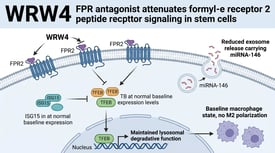
Formyl peptide receptors (FPRs) are a family of G protein-coupled receptors (GPCRs) that play a crucial role in innate immunity and inflammation. They are primarily expressed on myeloid cells, such as neutrophils and macrophages, and are activated by endogenous and exogenous formylated peptides, including bacterial N-formylmethionine peptides and mitochondrial formylated proteins released during tissue damage or inflammation. Upon ligand binding, FPRs trigger intracellular signaling cascades mediated by G proteins, leading to the activation of downstream pathways such as the MAPK and PI3K/Akt pathways. This activation results in a range of cellular responses, including chemotaxis, phagocytosis, degranulation, and the production of reactive oxygen species (ROS), all of which are critical for host defense against pathogens and for clearing cellular debris. Dysregulation of FPR signaling is implicated in various inflammatory and autoimmune diseases, including rheumatoid arthritis, inflammatory bowel disease, atherosclerosis, and sepsis, where excessive or prolonged activation can contribute to tissue damage and chronic inflammation.
Conversely, impaired FPR function can compromise immune responses, increasing susceptibility to infections. FPR inhibitors are being investigated as therapeutic agents to modulate inflammatory responses and treat conditions characterized by excessive or aberrant immune cell activity. Current research is largely preclinical, focusing on identifying small molecules that can antagonize FPR activation. Notable research compounds include cyclosporine A derivatives and specific peptide antagonists. Inhibitors can be classified based on their specificity for different FPR subtypes (FPR1, FPR2, FPR3) or their mechanism of action, such as competitive antagonists that block ligand binding or allosteric modulators.
Challenges in developing FPR inhibitors include achieving subtype selectivity, as FPR2, in particular, can be activated by a wide range of ligands, and managing potential immunosuppressive side effects. Understanding the complex roles of FPRs in different inflammatory contexts is crucial for designing effective inhibitors. Combination therapies might involve using FPR inhibitors alongside anti-inflammatory agents or immunosuppressants to achieve synergistic effects. Research tools like specific agonists and antagonists are essential for dissecting FPR signaling pathways and validating therapeutic targets. The development of selective FPR inhibitors holds promise for treating a range of inflammatory disorders by dampening harmful immune responses.