STI571 inhibits c-KIT, PDGFR, and Abl tyrosine kinase signaling in mast cell tumors
Copy code to add this image to your page
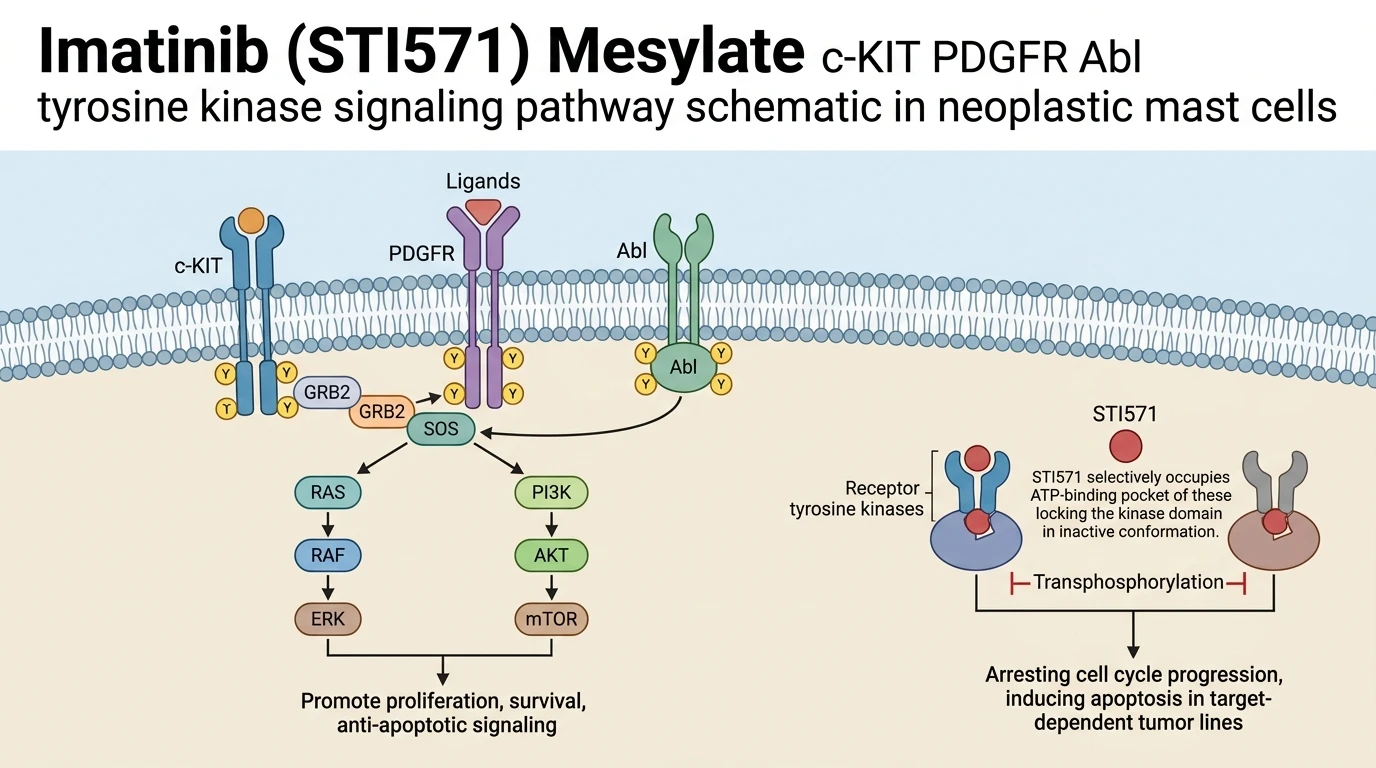
Receptor tyrosine kinases govern vital signaling networks that regulate cellular survival, proliferation, and differentiation. Dysregulation of c-KIT (CD117), platelet-derived growth factor receptor (PDGFR), and Abl tyrosine kinase frequently drives oncogenic transformation in canine and human neoplasms. In cutaneous mast cell tumors (MCTs), constitutive kinase activation often results from juxtamembrane domain mutations or overexpression. This aberrant activity triggers persistent downstream flux through the MAPK/ERK and PI3K/AKT pathways, overriding physiological apoptotic checkpoints. Targeting the enzymatic activity of these kinases represents a validated strategy to suppress neoplastic proliferation.
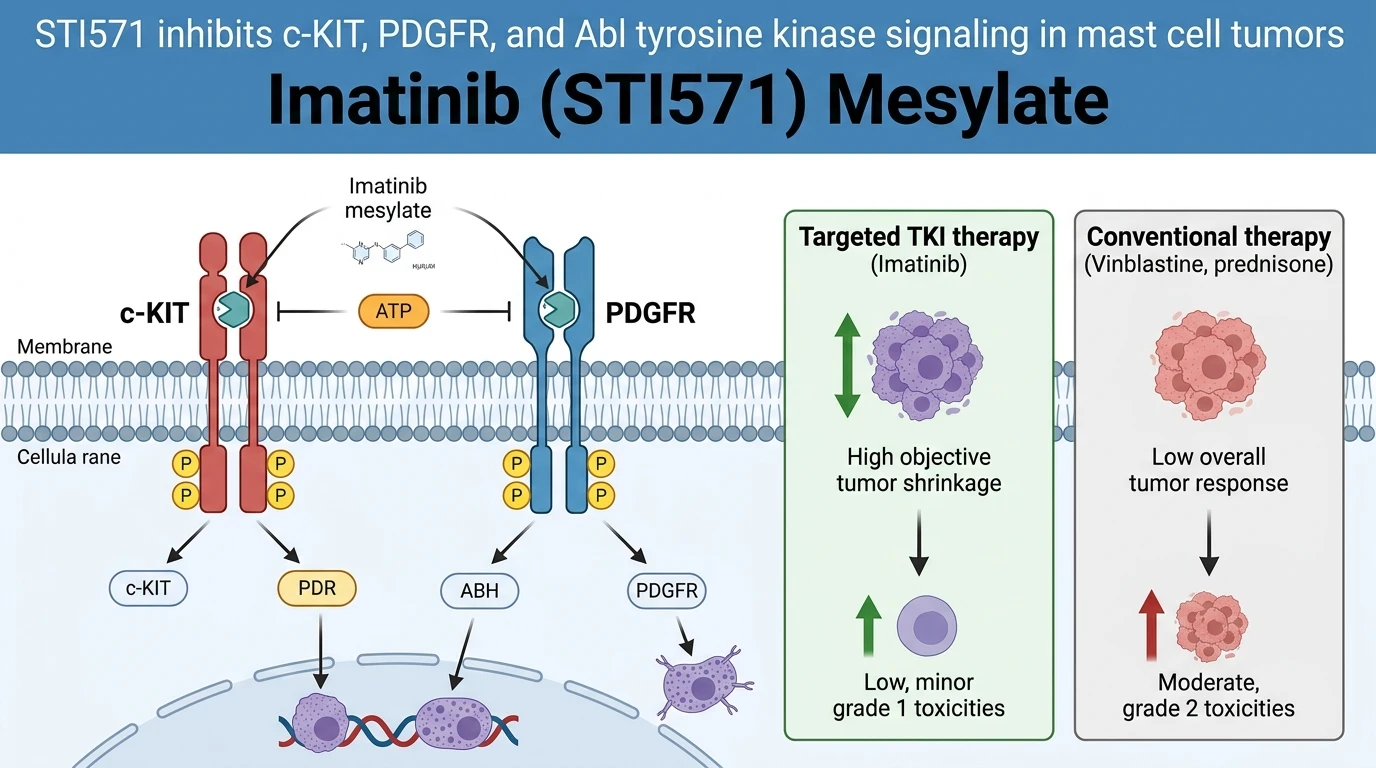
Imatinib (STI571) Mesylate functions as a selective small-molecule tyrosine kinase inhibitor (TKI). Mechanistically, the molecule binds competitive to the adenosine triphosphate (ATP) binding cleft within the inactive kinase domain of c-KIT, PDGFR, and Abl. By stabilizing this inactive conformation, the compound prevents ATP binding and subsequent transphosphorylation of key tyrosine residues. Without phosphorylation of these intracellular docking sites, downstream effector proteins cannot be recruited, effectively shutting off pro-survival signaling cascades. Detailed analyses of biophysical receptor-ligand kinetics demonstrate high thermodynamic affinity for these targeted kinase pockets under equilibrium conditions.
To establish translational utility, a clinical study evaluated the efficacy and safety of imatinib mesylate (IM) in comparison to a standard conventional chemotherapy protocol comprising vinblastine and prednisone (VP). The cohort consisted of 24 dogs presenting with cutaneous mast cell tumors. Tumor burden was quantified precisely using computed tomography (CT) imaging prior to and following treatment regimens. Volumetric changes were categorized strictly according to Veterinary Cooperative Oncology Group (VCOG) consensus criteria to classify objective response rates.
Therapeutic evaluation revealed marked disparities in antitumor response between treatment arms. Dogs receiving imatinib mesylate achieved an objective response rate (ORR) of 30.76%. In contrast, the conventional VP chemotherapy arm demonstrated an ORR of only 9.09%. Computed tomography measurements confirmed significant lesion regression in the IM group, reflecting effective target modulation within neoplastic tissue. These imaging findings confirm that ATP-competitive inhibition of target TKIs yields superior tumor shrinkage compared to non-targeted cytotoxic chemotherapy in this disease setting.
Adverse event profiles were monitored closely using VCOG Common Terminology Criteria for Adverse Events (VCOG-CTCAE). Dogs treated with imatinib mesylate experienced exclusively mild, self-limiting toxicities restricted to grade 1 events. Conversely, animals in the VP group demonstrated a broader spectrum of adverse reactions, exhibiting significantly higher incidences of grade 1 and grade 2 toxicities, including myelosuppression and gastrointestinal distress. These empirical observations highlight the expanded therapeutic window achieved through targeted kinase inhibition, establishing imatinib mesylate as a potent, better-tolerated alternative to conventional cytotoxic protocols in canine low-grade mast cell tumors.
Therapeutic Efficacy and Safety in Canine Neoplasms
Copy code to add this image to your page
Imatinib Mesylate is a selective tyrosine kinase inhibitor targeting c-KIT, PDGFR, and Abl kinase domains. By competitively occupying the inactive ATP-binding pocket, it prevents autophosphorylation and suppresses downstream RAS-RAF-MEK-ERK and PI3K-AKT survival signaling. In canine low-grade cutaneous mast cell tumors, this targeted inhibition induces cell cycle arrest and apoptosis, yielding an objective response rate superior to conventional chemotherapy with minimal systemic toxicity.
Superior Objective Tumoral Response in Canine Low-Grade Mast Cell Tumors
Targeting specific kinase drivers yields clear clinical advantages over systemic cytotoxic doublets. In a controlled cohort of 24 dogs with cutaneous mast cell tumors, therapeutic response was quantified via volumetric computed tomography measurements under standardized VCOG criteria. Dogs receiving imatinib mesylate demonstrated an objective response rate of 30.76%. Tumor regression occurred rapidly following initiation of therapy. By contrast, animals receiving the conventional chemotherapy regimen of vinblastine and prednisone achieved an ORR of only 9.09%. The observed response differential reflects direct inhibition of c-KIT signaling in target-dependent tumor populations. Treatment with STI571 effectively shuts down ligand-independent phosphorylation cascades. Cell proliferation ceased rapidly in responsive lesions. These volumetric image metrics confirm the superior antineoplastic activity of selective tyrosine kinase inhibition over empirical cytotoxic combinations in this clinical setting.
Attenuated Systemic Toxicity Profile Relative to Cytotoxic Chemotherapy Protocols
Evaluating adverse event profiles is critical when establishing long-term targeted maintenance protocols. Treatment safety was evaluated using standardized VCOG-CTCAE criteria across all enrolled canine subjects. Dogs treated with STI571 exhibited favorable drug tolerance throughout the study duration. All observed adverse events in the imatinib arm remained strictly limited to grade 1 intensity. Nausea and transient lethargy resolved without permanent intervention. Conversely, the vinblastine and prednisone cohort demonstrated significantly higher rates of grade 1 and grade 2 toxicities. Neutropenia and gastrointestinal toxicity required supportive care in several VP-treated animals. The absence of severe myelosuppression in the targeted therapy group highlights the selectivity of kinase inhibition. These findings indicate that selective tyrosine kinase blockade provides an effective therapeutic index while preserving systemic physiological function.