Kinesin Inhibitors
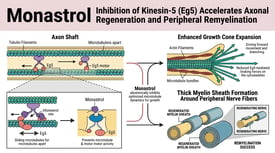
Kinesins are a superfamily of microtubule-based motor proteins that utilize the energy from ATP hydrolysis to move along microtubules, performing essential roles in intracellular transport and cell division. Among the 45 kinesins identified in humans, Kinesin-5 (also known as Eg5 or KSP) has emerged as a prominent target for cancer therapy. Eg5 is essential for the formation of a bipolar mitotic spindle; it functions by sliding antiparallel microtubules apart to establish and maintain spindle bipolarity. Inhibition of Eg5 leads to the collapse of the mitotic spindle into a characteristic monoastral structure, resulting in a prolonged mitotic arrest and subsequent cell death by apoptosis. This mechanism is distinct from that of traditional microtubule-targeting agents like taxanes and vinca alkaloids, which interfere with the dynamics of the microtubules themselves.
A significant advantage of Kinesin inhibitors is their specificity for dividing cells; since Eg5 is not required for the function of stable microtubules in non-dividing neurons, these inhibitors do not typically cause the peripheral neuropathy that often limits the use of taxanes. Several small-molecule inhibitors of Eg5 have entered clinical trials, including ispinesib, filanesib (ARRY-520), and litonesib. These compounds are generally allosteric inhibitors that bind to a specific pocket (the L5 loop) in the motor domain, distinct from the ATP-binding site. Filanesib has shown the most promise, particularly in the treatment of multiple myeloma, where it has demonstrated clinical activity both as a monotherapy and in combination with proteasome inhibitors or corticosteroids. Despite the clear mechanistic rationale, the clinical efficacy of kinesin inhibitors in solid tumors has been largely disappointing.
This lack of success is attributed to several factors, including the relatively slow proliferation rate of many human solid tumors compared to preclinical models and the existence of compensatory mechanisms, such as the activity of other kinesins like Kinesin-12 (HSET), which can sometimes bypass the requirement for Eg5 in spindle assembly. Resistance can also arise through mutations in the allosteric binding pocket of Eg5. Current research is focused on identifying biomarkers to predict sensitivity, such as low levels of the pro-survival protein Mcl-1, which has been linked to better responses to filanesib. Additionally, researchers are exploring inhibitors of other mitotic kinesins, such as CENP-E and MKLP2, which are involved in chromosome alignment and cytokinesis, respectively. Classification of kinesin inhibitors is primarily based on their target specificity and the structural domain they bind to.
While the first wave of kinesin inhibitors focused almost exclusively on Eg5, the next generation of research is looking toward more complex combination strategies and the development of inhibitors for kinesins involved in non-mitotic processes, such as axonal transport in neurological diseases. The field continues to evolve as we better understand the spatial and temporal regulation of these molecular motors throughout the cell cycle.