Triptolide Sensitizes Platinum-Resistant Ovarian Cancer via PI3K/Akt Pathway Suppression
Copy code to add this image to your page
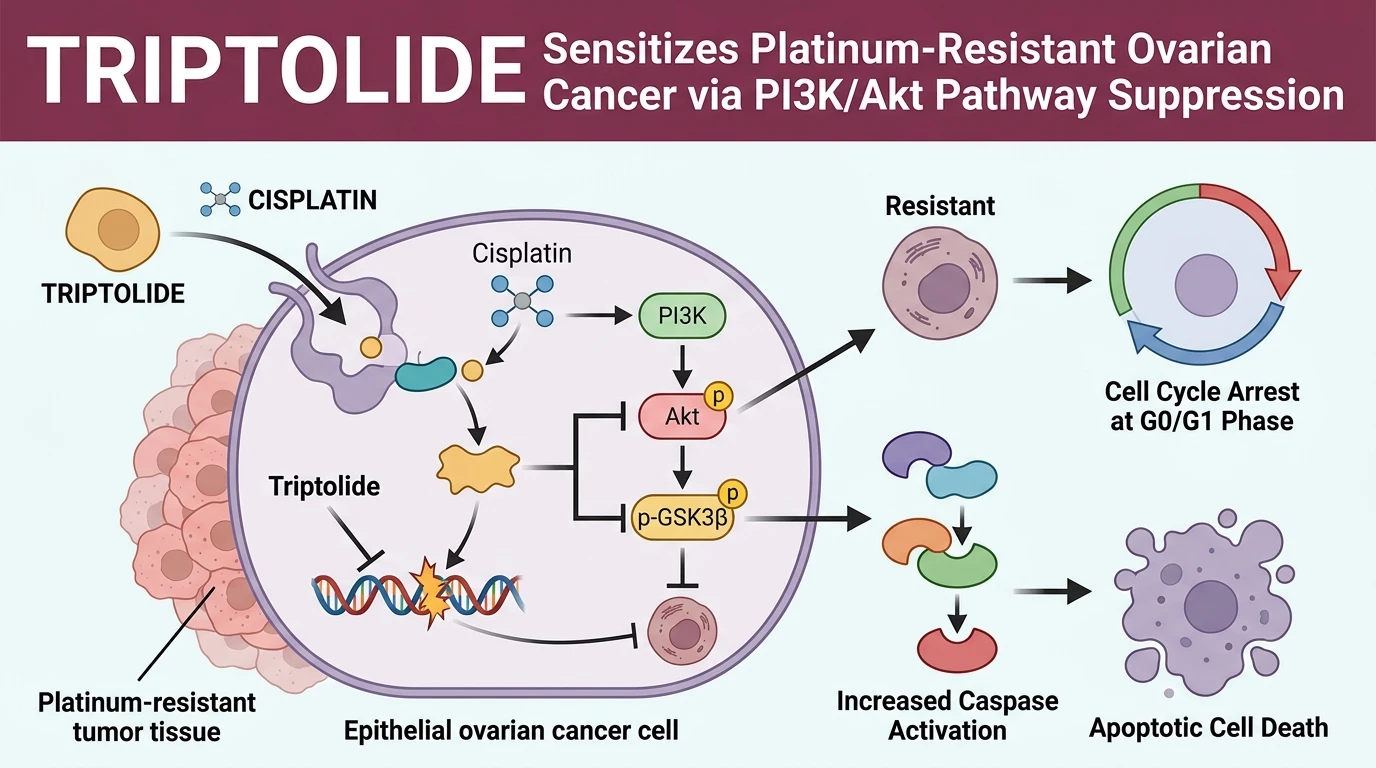
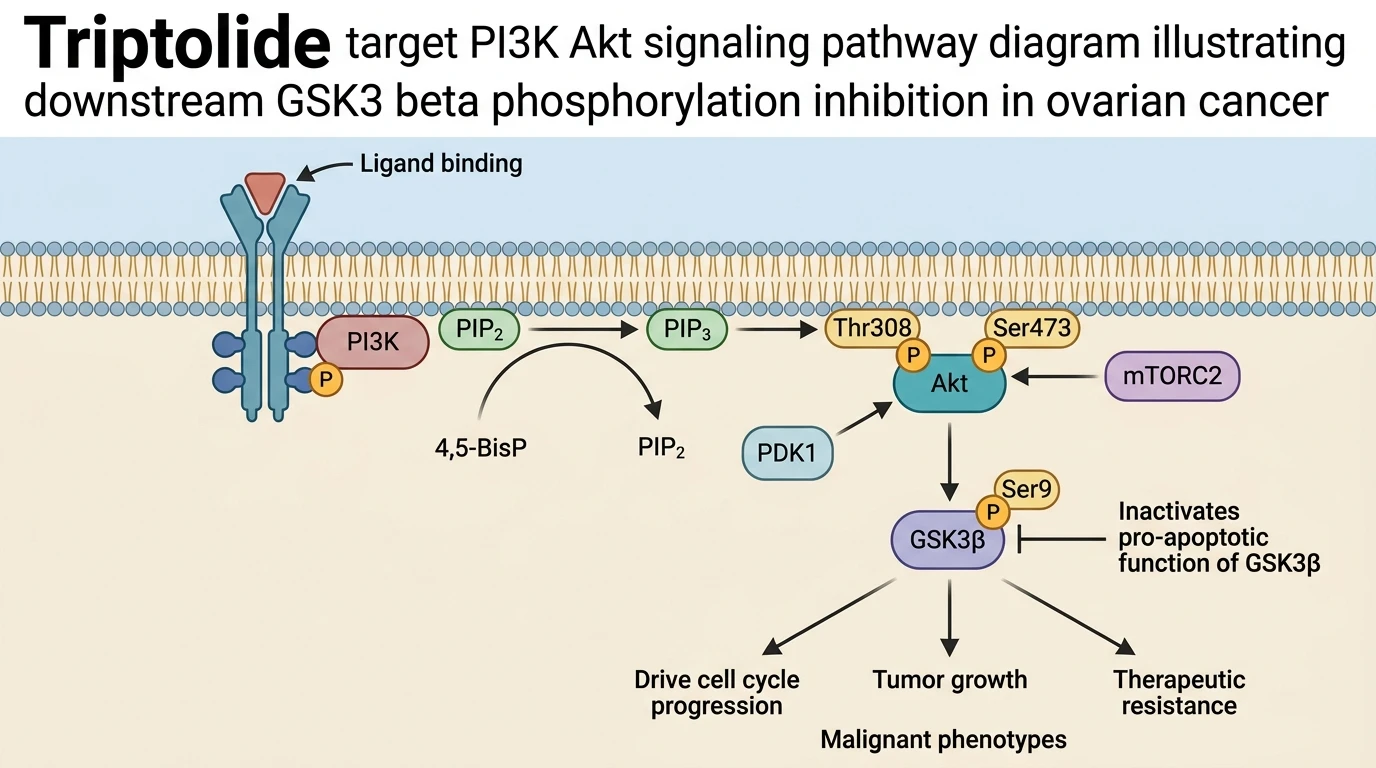
Platinum resistance remains a formidable barrier in the management of epithelial ovarian cancer, frequently driven by hyperactivation of pro-survival kinase cascades. Among these signaling networks, the phosphatidylinositol 3-kinase (PI3K)/Akt cascade functions as a central driver of cell survival, anti-apoptotic signaling, and chemotherapeutic escape. In cisplatin-resistant epithelial ovarian cancer cells (specifically the COC1/DDP cell line), constitutive activation of Akt promotes downstream phosphorylation of glycogen synthase kinase 3 beta (GSK3β) at Ser9. This phosphorylation event inactivates GSK3β, preventing it from facilitating degradation of cyclin proteins and pro-apoptotic factors, which allows malignant cells to evade chemotherapy-induced death.
Pharmacological intervention using Triptolide, a naturally derived diterpene triepoxide, targeting this pathway offers a potent strategy to restore chemosensitivity. In vitro evaluations in COC1/DDP cell lines demonstrate that Triptolide exerts significant anti-proliferative activity in a concentration-dependent manner. Mechanistic profiling reveals that treatment does not alter total protein expression levels of Akt or GSK3β; instead, it selectively suppresses the phosphorylated isoforms, p-Akt and p-GSK3β. Suppression of p-Akt reduces the phosphorylation of GSK3β at Ser9, thereby restoring GSK3β enzymatic activity and driving downstream cellular remodeling. Cellular kinetic assays indicate that this pathway blockade induces cell cycle arrest predominantly at the G0/G1 phase, effectively halting DNA synthesis and cellular replication. Structural insights into ATP-binding pockets, similar to those identified in crystallographic studies of kinase complexes, highlight how small-molecule modulators alter downstream target phosphorylation without degrading total native kinase pools.
In addition to growth arrest, Triptolide administration activates classical intrinsic apoptotic cascades in resistant cells. Flow cytometry assays confirm a significant, dose-dependent rise in late apoptotic and necrotic cell populations following exposure. When combined with standard cisplatin (DDP) regimens, the compound exhibits marked synergistic efficacy. The combination treatment achieves the highest rate of apoptosis in COC1/DDP cells compared to either agent administered as monotherapy. This synergistic effect stems directly from the dual blockade of survival signals; cisplatin induces DNA damage, while pathway inhibition prevents p-Akt from executing survival signaling networks.
Translational validation of these molecular events was confirmed using orthotopic epithelial ovarian cancer rat models. In vivo, monotherapy and combination therapy significantly reduced primary tumor burden and excised tumor weights. Beyond direct tumor cell cytotoxicity, systemic immunomodulatory and anti-inflammatory effects were observed. Treatment altered the splenic lymphocyte transformation ratio and led to marked reductions in circulating serum inflammatory cytokines, including interleukin-2 (IL-2) and tumor necrosis factor-alpha (TNF-α). These in vivo parameters indicate that attenuating systemic inflammatory loops may further complement the direct intracellular kinase inhibition. Consequently, target engagement of the PI3K/Akt axis provides a robust biological rationale for overcoming acquired platinum resistance in epithelial ovarian carcinoma.
Pharmacological Synergism and Downstream Kinase Suppression
Copy code to add this image to your page
Triptolide selectively inhibits the PI3K/Akt pathway by attenuating p-Akt and p-GSK3β levels without affecting total protein expression. This blockade suppresses survival signaling, resulting in G0/G1 cell cycle arrest and induction of apoptosis. In platinum-resistant ovarian cancer (COC1/DDP) models, combining Triptolide with cisplatin restores chemosensitivity, yielding elevated apoptotic rates. In vivo orthotopic models confirm tumor weight reduction, suppression of serum IL-2 and TNF-α cytokines, and alteration of the splenic lymphocyte transformation ratio.
PI3K Akt Phosphorylation Suppression Restores Cisplatin Sensitivity
Inhibition of survival signaling cascades reverses acquired drug resistance. In cisplatin-resistant COC1/DDP ovarian cancer models, Triptolide targets the PI3K/Akt axis without altering baseline protein synthesis. Western blot analyses demonstrate a pronounced reduction in p-Akt and p-GSK3β levels following treatment; conversely, total Akt and GSK3β abundances remain static. Downstream signal transduction ceased in a concentration-dependent manner. By suppressing Akt phosphorylation, the drug prevents Ser9 phosphorylation on GSK3β, restoring its functional enzymatic state. This biochemical shift activates intrinsic apoptotic signaling while arresting cells at the G0/G1 phase transition. Co-administration with cisplatin produces synergistic cytotoxicity. Combined treatment yields the maximum observed apoptotic fraction in vitro.
Attenuation of Tumor Growth and Systemic Inflammatory Markers
Validation in vivo confirms localized and systemic therapeutic responses. In orthotopic epithelial ovarian cancer rat models, Triptolide administration markedly decreased tumor burden relative to vehicle controls. Excised tumor weights dropped significantly. In addition to direct anti-tumor effects, systemic immune responses shifted favorably. Treatment altered the splenic lymphocyte transformation ratio while lowering circulating inflammatory cytokines; specifically, serum IL-2 and TNF-α concentrations fell rapidly post-treatment. These observations indicate dual pharmacological action: intracellular inhibition of survival kinases and systemic attenuation of pro-tumorigenic inflammatory signals within tested animal cohorts.