ACP-196 (Acalabrutinib) Inactivation of BTK in Relapsed Chronic Lymphocytic Leukemia Therapy
Copy code to add this image to your page
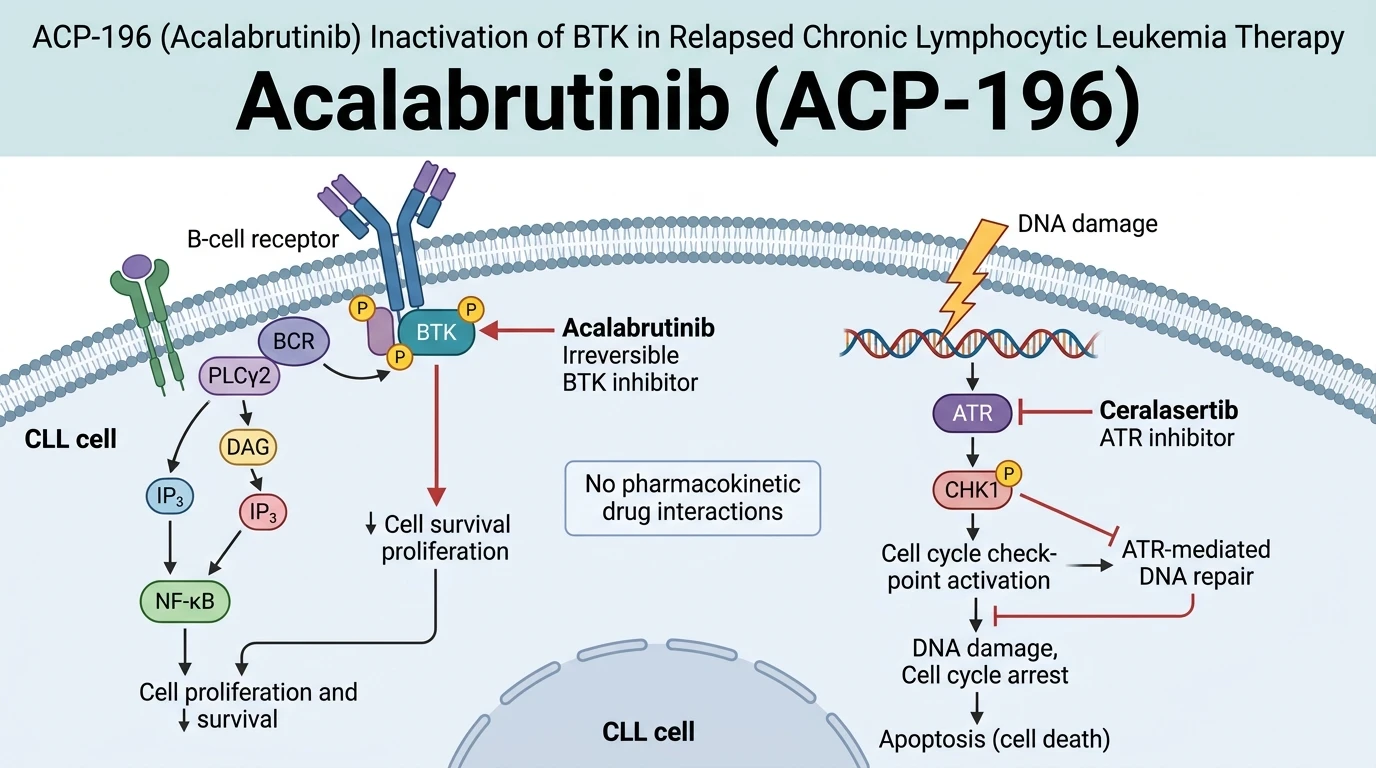
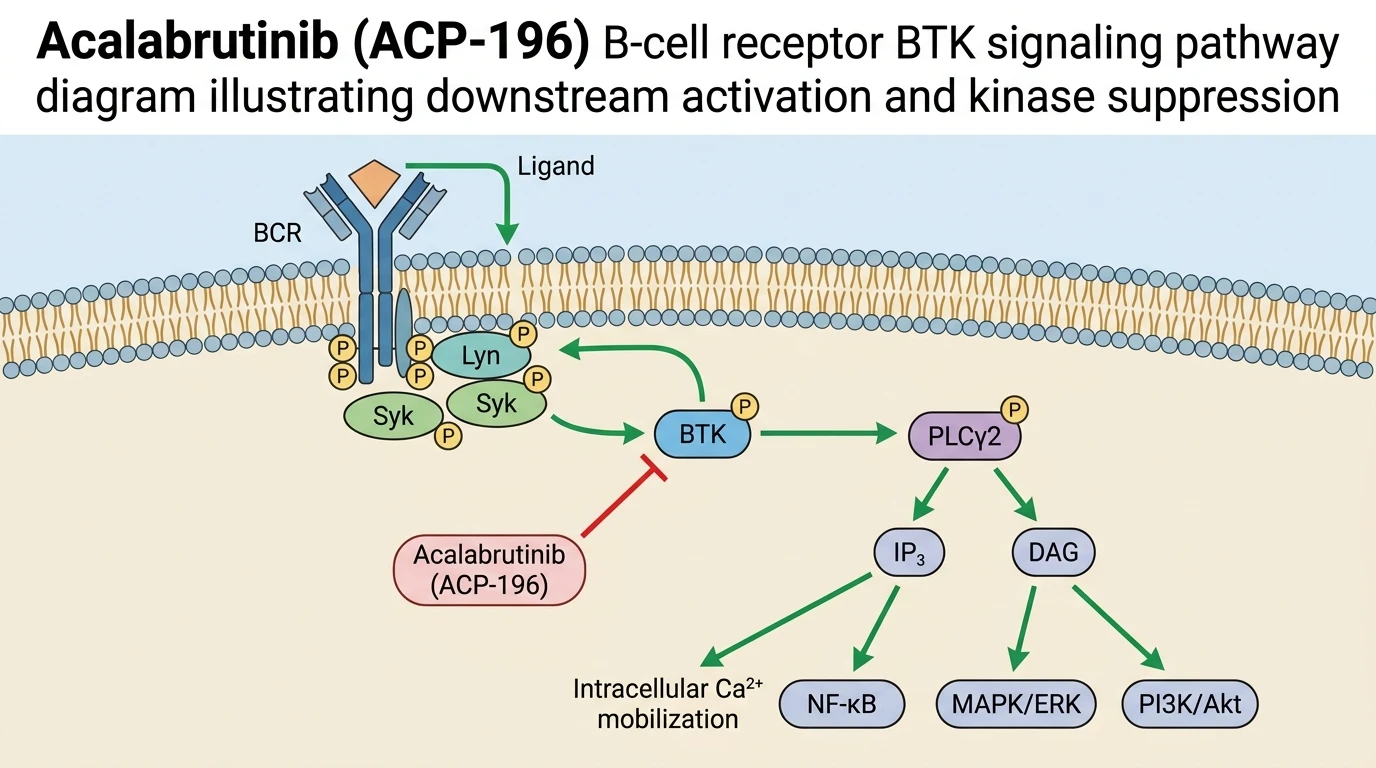
Chronic lymphocytic leukemia (CLL) remains driven by constitutive activation of B-cell receptor (BCR) signaling, where Bruton tyrosine kinase (BTK) functions as an indispensable enzymatic node. Second-generation targeted therapies, specifically Acalabrutinib (ACP-196), have altered therapeutic strategies for patients with high-risk relapsed or refractory (R/R) disease. Acalabrutinib (ACP-196) acts as a highly selective, small-molecule inhibitor that forms a covalent bond with the Cys481 residue located within the ATP-binding site of BTK. By suppressing autophosphorylation at Tyr223, ACP-196 disrupts downstream activation of phospholipase C-gamma 2 (PLCγ2), extracellular signal-regulated kinase (ERK), and nuclear factor kappa B (NF-κB) transcription factors. Consequently, leukemic cells lose essential microenvironmental retention cues and undergo apoptotic cell death. Despite the substantial therapeutic efficacy of BTK inhibition, complete eradication of malignant clones is rarely achieved with monotherapy alone. Genomic instability and clonal evolution frequently precipitate disease progression, prompting investigations into rational combination regimens. Among candidate pathways, the ataxia telangiectasia and Rad3-related (ATR) kinase represents an important target due to its central role in coordinating the DNA damage response during replication stress. Combining ATR inhibition with BTK inhibition was hypothesized to induce synthetic lethality in high-risk leukemia cells harboring damaged DNA pathways. A Phase I/II clinical evaluation examined ceralasertib, a potent oral ATR inhibitor, both as monotherapy and in combination with acalabrutinib in cohorts of patients with R/R CLL. Findings from early-phase assessment revealed distinct clinical and pharmacodynamic boundaries for these agents. Monotherapy ceralasertib demonstrated limited single-agent efficacy in this patient population. Biological responses were constrained, and administration was accompanied by notable hematologic toxicity. High rates of severe cytopenias were documented under daily dosing schedules. Specifically, grade 3 or higher anemia and grade 3 or higher thrombocytopenia occurred at high frequencies, necessitating treatment delays and dose modifications. To address these single-agent limitations, researchers evaluated a novel combination schedule pairing continuous acalabrutinib dosing with intermittent ceralasertib administration. Patients received acalabrutinib at a dose of 100 mg twice daily continuously, while ceralasertib was co-administered at 160 mg twice daily using an intermittent schedule of 1 week on therapy followed by 3 weeks off therapy. This pulse-dosing schedule was designed to preserve DNA damage response inhibition during peak exposure while allowing bone marrow recovery during the drug holiday. The combination regimen demonstrated a highly favorable safety and tolerability profile in the evaluated clinical cohort. No dose-limiting toxicities were reported during the dose-escalation phase. Hematologic side effects were manageable, reflecting the therapeutic benefit of the intermittent ATR inhibition schedule. Concurrent pharmacodynamic assessments verified that continuous administration of ACP-196 sustained high target engagement. Active-site BTK occupancy levels reached 97% to 99% in peripheral blood mononuclear cells, maintaining near-complete suppression of BCR downstream signaling throughout the treatment cycle. In terms of preliminary therapeutic activity, the combination regimen produced compelling results in target populations. Among BTK inhibitor-naive patients with high-risk R/R CLL, the overall response rate reached 100%, with all evaluable individuals achieving partial responses under primary protocol definitions. These objective responses occurred alongside favorable drug-drug interaction metrics. Pharmacokinetic profiling confirmed that steady-state plasma concentrations of acalabrutinib and ceralasertib were unaltered by concurrent administration, proving that neither agent impacts the systemic clearance or bioavailability of the other. Mechanistic insights derived from this trial emphasize the importance of kinetic optimization when combining targeted signaling inhibitors with DNA damage response antagonists, as detailed in broad reviews on irreversible BTK inhibitor profiles. While continuous ATR blockade causes unacceptable bone marrow suppression, scheduled intermittent delivery maintains therapeutic synergy with continuous covalent kinase inhibitors. These clinical observations indicate that strategic schedule modifications can successfully decouple antitumor activity from dose-limiting hematologic side effects.
Pharmacodynamic Characterization and ATR Co-Inhibition Synergy
Copy code to add this image to your page
Acalabrutinib (ACP-196) selectively forms a covalent bond with Cys481 in the ATP-binding site of Bruton tyrosine kinase (BTK), causing irreversible inhibition of BCR signaling, downstream PLCγ2 activation, and survival pathways in B-cell malignancies. Combining continuous ACP-196 dosing with an intermittent regimen of the ATR inhibitor ceralasertib achieves sustained 97–99% BTK active-site occupancy while preventing cumulative hematologic toxicities. This dual targeting disrupts BCR-mediated survival and DNA repair pathways concurrently, resulting in robust antitumor efficacy in relapsed chronic lymphocytic leukemia without causing mutual pharmacokinetic interference.
Hematologic Toxicity Limits Ceralasertib Monotherapy in Relapsed Disease
Single-agent ATR inhibition with ceralasertib showed restricted clinical activity in patients with high-risk relapsed/refractory chronic lymphocytic leukemia. Systemic toxicity emerged as the principal dose-limiting factor. Grade 3 or higher anemia occurred in a significant proportion of treated individuals. Severe thrombocytopenia was observed at high frequencies during daily dosing cycles. These hematologic toxicities required frequent dose interruptions and prevented target engagement levels necessary to induce sustained tumor regression. In this refractory setting, solitary DNA replication stress targeting was insufficient to overcome survival signals driven by the leukemic microenvironment.
Continuous BTK Target Occupancy Suppresses Relapsed B-Cell Proliferation
Continuous oral administration of 100 mg acalabrutinib twice daily maintained profound biochemical suppression of tumor signaling nodes. Active-site target occupancy assays revealed 97% to 99% covalent binding of ACP-196 to cellular BTK enzymes. Downstream activation of effector kinases ceased consistently in peripheral blood samples. This high degree of target coverage persisted throughout the continuous dosing cycle. B-cell receptor signaling was effectively uncoupled from downstream anti-apoptotic pathways. The selective binding kinetics of ACP-196 prevented off-target inhibition of alternative kinase families, maintaining systemic tolerability.
Intermittent Dosing Mitigates Toxicities and Yields High Response Rates
Co-administering intermittent ceralasertib with continuous acalabrutinib altered clinical tolerability. Ceralasertib was delivered at 160 mg twice daily for 1 week across a 28-day cycle. No dose-limiting toxicities occurred in this combination schedule. Hematologic profiles remained manageable without cumulative marrow suppression. Among BTK inhibitor-naive subjects, an overall response rate of 100% was documented. All responses were characterized as partial responses according to standard clinical criteria. Pharmacokinetic assays confirmed the absence of drug-drug interactions between ceralasertib and ACP-196 under physiological testing conditions.