AZD1390 ATM/ATR axis targeting selectively radiosensitizes central nervous system metastases
Copy code to add this image to your page
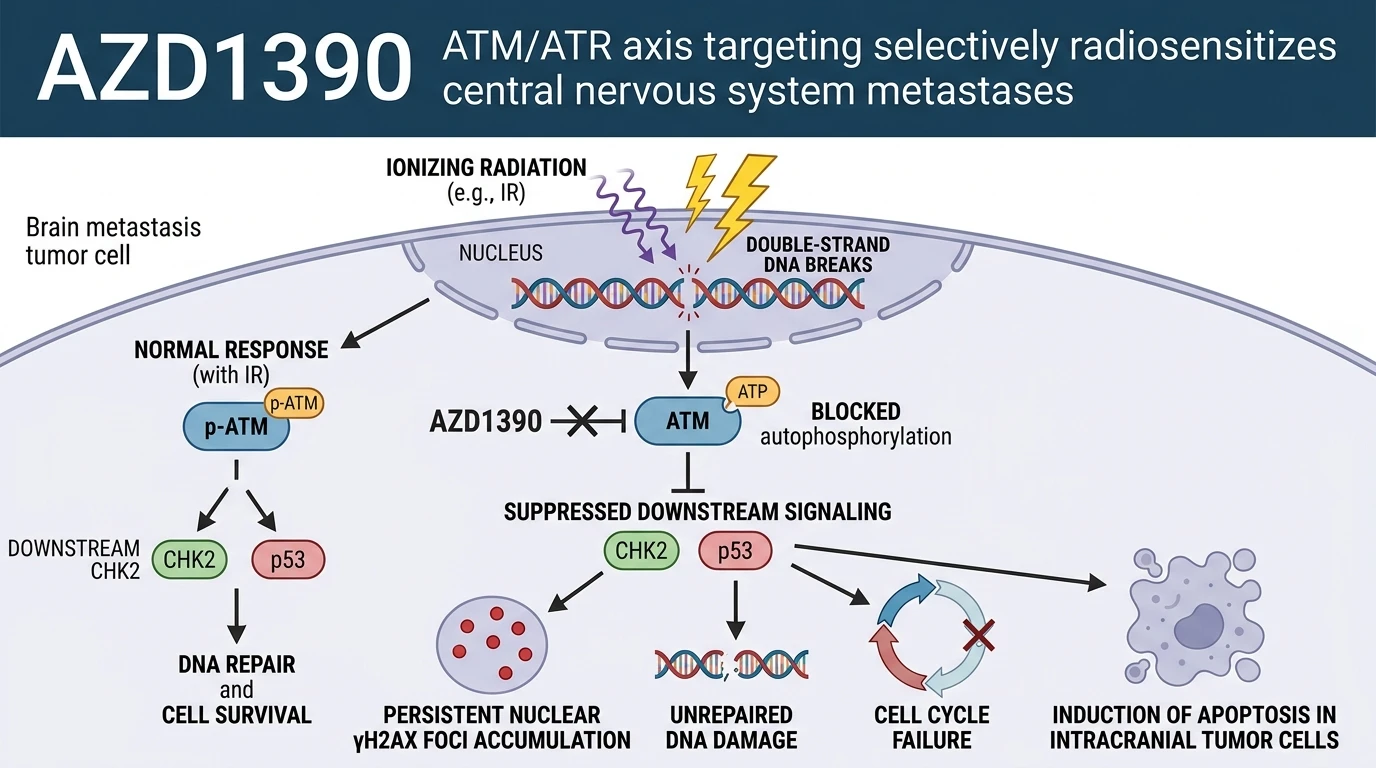
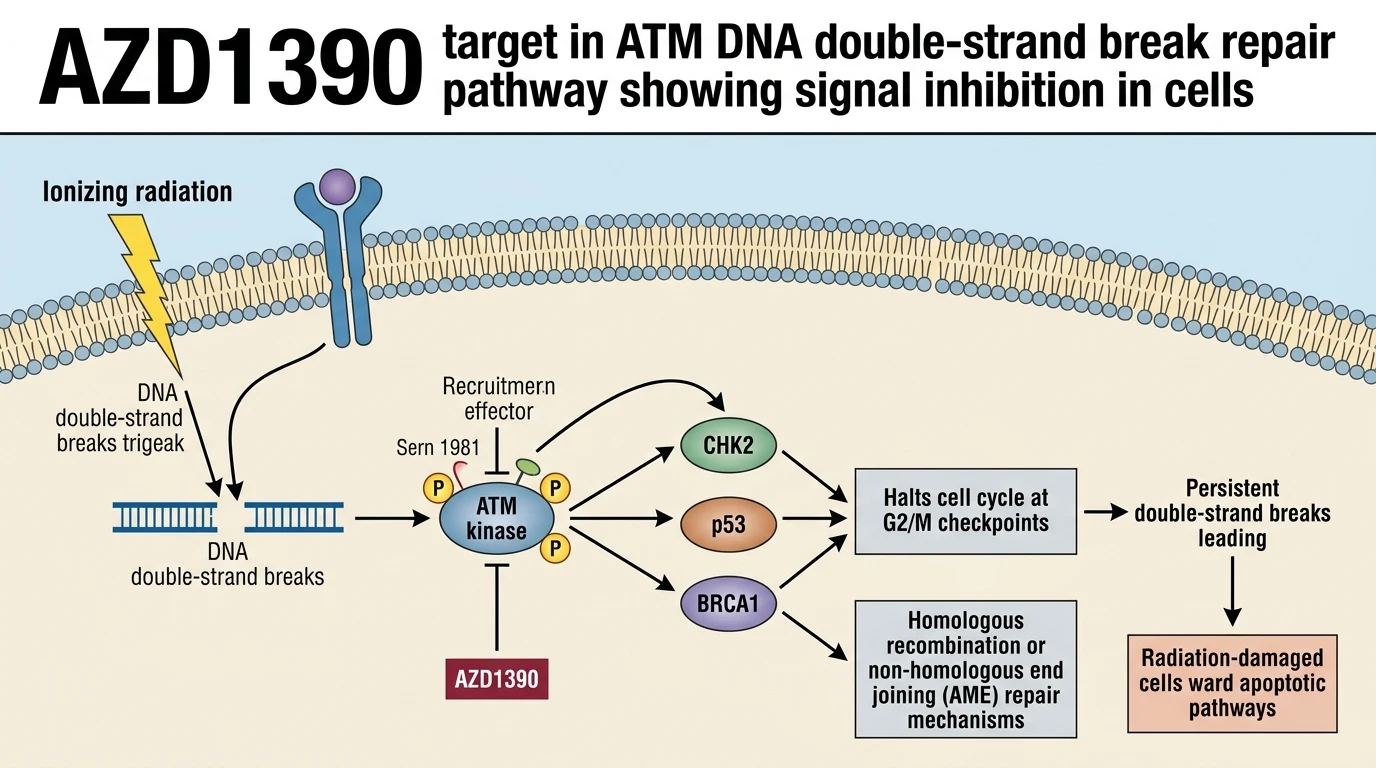
Ataxia-telangiectasia mutated (ATM) kinase functions as a master regulator of the cellular response to DNA double-strand breaks (DSBs). Following exposure to ionizing radiation, ATM rapidly autophosphorylates at Ser1981 and phosphorylates key target proteins, including CHK2, p53, and H2AX. This signaling cascade coordinates cell cycle arrest and activates complex DNA repair pathways. AZD1390 was engineered as a potent, central nervous system (CNS)-penetrant small molecule inhibitor of ATM kinase, designed specifically to overcome blood-brain barrier restriction while reinforcing the cytotoxic efficacy of radiation therapy.
In the context of breast cancer brain metastases—where alterations in DNA damage response (DDR) genes frequently occur—radiation therapy remains a primary therapeutic modality. However, efficient repair of radiation-induced DSBs by tumor cells often limits treatment efficacy and contributes to local recurrence. Pharmacological inhibition of ATM using AZD1390 blocks autophosphorylation and downstream substrate activation, preventing the cellular machinery from repairing severe genomic damage. In preclinical studies evaluating ATM kinase inhibition strategies, small molecule therapeutics demonstrate high biochemical selectivity for ATM over related phosphatidylinositol 3-kinase-related kinase (PIKK) family members, including ATR, mTOR, and DNA-PK.
Pharmacokinetic characterization confirms that AZD1390 crosses the intact and compromised blood-brain barrier efficiently. This property is crucial for achieving therapeutically relevant free drug concentrations within intracranial tumor lesions. Brain-to-plasma ratios achieved in rodent models indicate robust central distribution without requiring efflux transporter saturation. When evaluated in patient-derived xenograft (PDX) models of breast cancer CNS metastasis harboring DDR gene alterations, combining AZD1390 with fractionated ionizing radiation yielded pronounced synergistic activity. Under controlled experimental conditions, this combination led to marked tumor growth suppression across both ectopic flank and orthotopic brain implantation models.
Mechanistic analysis in these models revealed sustained elevated levels of phosphorylated H2AX (γH2AX), a key biomarker representing unresolved double-strand DNA fractures. Radiation monotherapy induced transient γH2AX expression that rapidly returned to baseline as repair mechanisms proceeded; conversely, co-administration with AZD1390 sustained γH2AX signaling over extended intervals. Downstream target activation ceased. The blockage prevented repair factor assembly at damaged chromatin foci. This sustained damage response triggered apoptotic pathways within DDR-mutated neoplastic cells. Crucially, the observed antitumor efficacy occurred without inducing overt systemic toxicity or severe neurological impairment in tested animals. Survival analysis demonstrated significant prolongation of median overall survival in orthotopic PDX cohorts treated with the combination strategy compared to fractionated radiation alone.
Understanding the interaction between target engagement and therapeutic resistance requires analyzing how the AZD1390 ATM/ATR pathway modulation functions under different therapeutic regimes. While ATR signaling can act as a compensatory bypass mechanism during sustained ATM suppression, the primary therapeutic effect of AZD1390 centers on potent, selective target engagement at the ATM ATP-binding pocket. Biochemical assays show sub-nanomolar potency against purified ATM enzyme, with a high fold selectivity margin against closely related kinases. This target selectivity minimizes off-target toxicity in non-transformed neural tissue.
In orthotopic PDX models harboring specific DDR mutations—such as loss-of-function variants in BRCA1, PALB2, or ATM—the combination therapy caused sustained tumor regression. Fractional radiation schedules mimicking clinical dosing paradigms (e.g., 2 Gy per fraction) displayed enhanced lethality when paired with oral AZD1390 administration. Cellular clearance was accompanied by elevated caspase-3 cleavage and reduced Ki-67 proliferative index in histological sections of harvested brain tissue. These preclinical observations provide a clear rationale for clinical protocols combining CNS-penetrant ATM inhibitors with standard radiation therapy in patients presenting with intracranial metastatic disease.
The pharmacological profile of AZD1390 addresses a long-standing challenge in neuro-oncology: achieving therapeutic drug levels beyond the blood-tumor barrier without causing systemic dose-limiting toxicities. Pharmacodynamic studies verified that target inhibition in orthotopic brain tumors matched or exceeded target engagement in peripheral tissues. The selective sensitization of tumor cells over normal astrocytes and neurons appears driven by underlying DDR defects present within the neoplastic genome. Consequently, AZD1390 represents a refined molecular tool for dissecting DNA damage repair dependencies in secondary brain malignancies.
Pharmacological Evaluation and Intracranial Radiosensitization Mechanisms
Copy code to add this image to your page
AZD1390 is a central nervous system-penetrant, selective inhibitor of ataxia-telangiectasia mutated (ATM) kinase. By binding the ATP site of ATM, AZD1390 blocks radiation-induced autophosphorylation and downstream signaling through CHK2 and p53. This inhibition prevents repair of DNA double-strand breaks following radiation therapy. Unrepaired breaks accumulate as persistent γH2AX foci, driving DDR-mutated breast cancer brain metastasis cells into apoptosis. AZD1390 acts as a potent radiosensitizer, suppressing intracranial tumor growth and prolonging overall survival without causing overt systemic toxicity.
BBB Permeability and Intracranial Target Engagement Dynamics
Central nervous system delivery represents a primary bottleneck for kinase inhibitors targeting intracranial metastases. AZD1390 was identified through chemical optimization aimed at minimizing P-glycoprotein and breast cancer resistance protein efflux. Brain-to-plasma partition coefficients demonstrate high passive brain permeability across intact blood-brain barriers. In orthotopic mouse models, oral administration of AZD1390 resulted in rapid central nervous system accumulation. Free drug concentrations in brain tissue exceeded the cellular IC50 for ATM autophosphorylation inhibition. Downstream signaling mediated by the AZD1390 ATM/ATR axis showed immediate reduction in Ser1981 ATM phosphorylation following drug exposure. This targeted engagement suppressed downstream CHK2 phosphorylation at Thr68 in orthotopic tumor lysates. Non-tumor neural tissues displayed transient baseline target coverage without significant neurotoxic sequelae. The therapeutic window remained wide across multiple dosing schedules.
Persistent DNA Double-Strand Breaks and Extended Survival
Combining AZD1390 with fractionated radiation therapy blocks homologous recombination and non-homologous end joining mechanisms. Fractionated ionizing radiation (2 Gy per dose) induces cyclic double-strand DNA damage in neoplastic tissue. In patient-derived xenograft models bearing DDR mutations, co-treatment with AZD1390 led to persistent nuclear γH2AX focus formation lasting over 24 hours post-irradiation. Single-agent radiation allowed rapid DNA repair within 4 to 6 hours. Persistent double-strand breaks initiated programmed cell death through mitochondrial apoptotic pathways. Median overall survival extended significantly in orthotopic brain tumor models receiving combination therapy compared to monotherapy controls. Ectopic flank models showed consistent volumetric tumor regression. Histopathological evaluation confirmed minimal treatment-related normal brain injury, supporting the selectivity of ATM inhibition in radiosensitizing DDR-deficient metastases.