RUNX Inhibitors
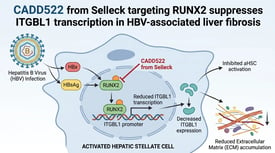
The Runt-related transcription factor (RUNX) family, comprising RUNX1, RUNX2, and RUNX3, consists of master regulators of gene expression that are essential for normal development and cellular differentiation. RUNX1 is critical for hematopoiesis, RUNX2 is indispensable for osteogenesis, and RUNX3 plays key roles in neurogenesis and the development of the gastrointestinal tract. All RUNX proteins function by forming a heterodimeric complex with a common non-DNA-binding partner, Core Binding Factor beta (CBFβ), which enhances their DNA-binding affinity and protects them from degradation. Dysregulation of RUNX factors is a common driver in various human diseases. RUNX1 is frequently mutated or involved in chromosomal translocations in acute myeloid leukemia (AML) and acute lymphoblastic leukemia (ALL). RUNX2 is often overexpressed in solid tumors like breast and prostate cancer, where it promotes bone metastasis and epithelial-mesenchymal transition (EMT).
RUNX3 can act as either a tumor suppressor or an oncogene depending on the tissue context. Targeting transcription factors like RUNX has traditionally been considered difficult, earning them the label of 'undruggable.' However, recent advances in drug discovery have led to the development of several promising RUNX inhibitors. One primary strategy is to disrupt the protein-protein interaction (PPI) between RUNX and CBFβ. Small molecules like Ro5-3335 and the more potent AI-10-47 and AI-14-91 have been developed to bind to CBFβ and prevent its interaction with RUNX1, thereby inhibiting its transcriptional activity. These compounds have shown efficacy in preclinical models of leukemia. Another approach involves targeting the DNA-binding Runt domain directly, although this has proven more challenging.
RUNX inhibitors can be classified into PPI disruptors, DNA-binding inhibitors, and indirect inhibitors that target upstream regulators or downstream effectors. A significant challenge in the field is the essential role of RUNX factors in normal physiology; for example, systemic inhibition of RUNX1 could lead to severe hematopoietic defects. Therefore, achieving a therapeutic window is a major concern. Furthermore, the context-dependent roles of RUNX proteins mean that an inhibitor might be beneficial in one cancer type but detrimental in another. Current research is focusing on the use of RUNX inhibitors in combination with other targeted therapies to overcome resistance. For instance, RUNX1 inhibition has been shown to sensitize certain tumors to PARP inhibitors or chemotherapy.
As our understanding of the structural biology of the RUNX/CBFβ complex and its diverse cistromes improves, the development of more selective and potent inhibitors is expected to provide new therapeutic avenues for both hematological and solid malignancies.