Piezo Channel Inhibitors
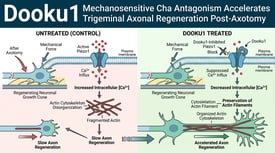
Piezo Channel inhibitors target a unique class of mechanosensitive ion channels, Piezo1 and Piezo2, which are responsible for converting mechanical stimuli into electrochemical signals. These channels are large, trimeric transmembrane proteins with a distinctive 'propeller' or 'blade' structure that senses changes in membrane tension. The mechanism of action for Piezo inhibitors involves blocking the central pore or interfering with the mechanical sensing mechanism of the blades. Piezo1 is widely expressed in non-sensory tissues such as the vascular endothelium, lungs, and bladder, where it regulates blood pressure, lymphatic development, and organ volume. Piezo2 is primarily found in sensory neurons, where it mediates light touch, proprioception, and mechanical pain. Diseases associated with Piezo Channel dysfunction include hereditary xerocytosis (linked to Piezo1 gain-of-function mutations), distal arthrogryposis, and chronic pain syndromes.
In cancer, Piezo1 has been implicated in tumor cell mechanosensing, promoting migration, invasion, and angiogenesis. The classification of Piezo inhibitors is currently in its early stages, with the most well-known agent being GsMTx4, a peptide toxin derived from tarantula venom. GsMTx4 is a gating modifier that inserts into the lipid bilayer and relieves the tension-induced activation of the channel. While GsMTx4 is a valuable research tool, it lacks absolute selectivity for Piezo channels over other mechanosensitive channels. More recently, small-molecule inhibitors like GMM-1 have been identified through high-throughput screening, offering more specific targeting. Current research is focused on understanding the structural basis of Piezo channel activation and inhibition using high-resolution cryo-electron microscopy.
This structural data is crucial for the rational design of next-generation inhibitors that can distinguish between Piezo1 and Piezo2. Preclinical studies are exploring the use of Piezo2 inhibitors for the treatment of mechanical allodynia and other forms of chronic pain, while Piezo1 inhibitors are being investigated for their potential to treat vascular diseases and certain types of cancer. A major challenge in the development of Piezo inhibitors is the ubiquity of mechanical sensing in the body; systemic inhibition could lead to significant side effects in the cardiovascular, respiratory, and sensory systems. Therefore, tissue-specific delivery or the development of biased modulators that only affect certain signaling pathways is a key area of research. Additionally, the 'force-from-lipids' model of Piezo activation suggests that the surrounding lipid environment plays a critical role, opening the possibility of modulating channel activity by targeting lipid metabolism. Combination therapy strategies, perhaps pairing Piezo inhibitors with traditional analgesics or anti-angiogenic drugs, are also being considered.
As the field of mechanobiology continues to grow, Piezo channels are emerging as high-priority targets for a wide range of medical conditions. The development of potent, selective, and safe Piezo inhibitors will require a deep integration of biophysics, structural biology, and pharmacology, promising a new era of mechanopharmacology.