TH5487 OGG1 inhibitor Blunts Hyperinflammation and Severe Anemia in Murine Malaria
Copy code to add this image to your page
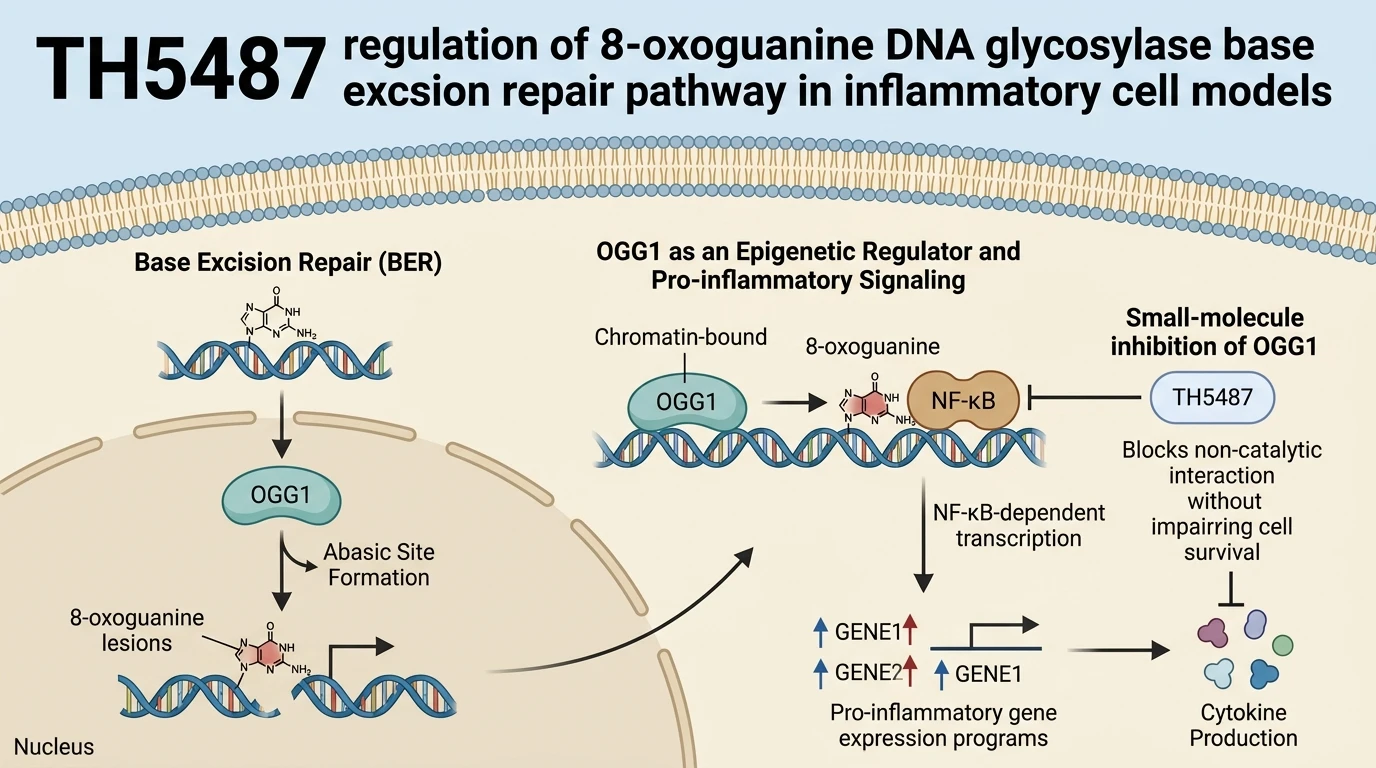
Malaria infection induced by Plasmodium species presents a dual pathological challenge: severe blood-stage parasite proliferation and uncontrolled systemic inflammation. During erythrocyte invasion and intraerythrocytic schizogony, high levels of reactive oxygen species accumulate within both host systemic circulation and infected tissues. Oxidative stress generates genomic lesions, predominantly 8-oxoguanine, across endothelial cells, macrophages, and parenchymal organs. The primary enzyme responsible for recognizing and excising this mutagenic base is 8-Oxoguanine DNA Glycosylase 1 (OGG1). Beyond its classical role in base excision repair pathways, OGG1 functions as a chromatin-bound epigenetic regulator. Upon binding 8-oxoguanine lesions in promoter regions, OGG1 facilitates the assembly and transcriptional activation of pro-inflammatory factors, including nuclear factor kappa B (NF-κB). In severe malaria, host hyperinflammation often causes extensive tissue damage beyond parasite-mediated destruction. Modulating host transcriptional responses driven by DNA repair enzymes represents a distinct host-directed therapeutic approach.
Recent experimental work evaluated the selective small-molecule compound TH5487 in a rodent malaria model. Structural studies indicate that TH5487 occupies the aromatic substrate-binding pocket of OGG1. This competitive interaction blocks extra-helical insertion of 8-oxoguanine bases into the active site; consequently, OGG1 cannot undergo the conformational shift necessary to assemble transcriptional complex machinery. The TH5487 OGG1 inhibitor prevents OGG1 from binding to damaged DNA lesions, thereby disrupting its interaction with downstream transcription factors. Under physiological conditions, target engagement by TH5487 blunts acute inflammatory gene expression without inducing cytotoxic DNA strand breaks. In Plasmodium berghei ANKA-infected mice, plasma OGG1 concentrations increased substantially during infection. Plasma OGG1 levels positively correlated with peripheral parasitemia. Elevated plasma enzyme levels indicate active cellular release or shedding during parasite expansion and ongoing systemic oxidative stress.
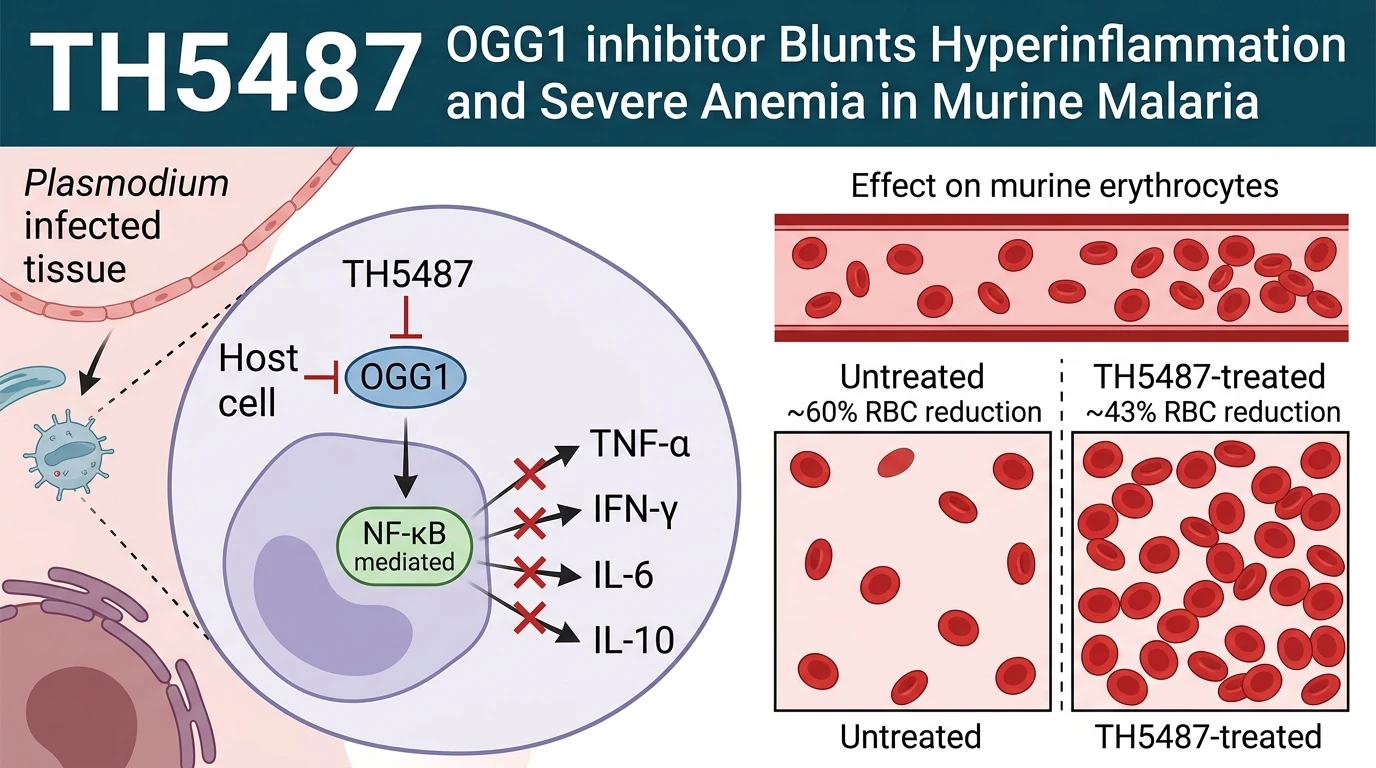
Therapeutic administration of TH5487 significantly altered disease severity in infected animals. A key pathological feature of severe malaria is profound anemia, driven by both parasitic lysis of red blood cells and clearance of uninfected erythrocytes through inflammatory pathways. In untreated infected control mice, total normal red blood cell counts exhibited a severe decline of approximately 60% relative to pre-infection baselines. In contrast, mice receiving daily pharmacological treatment with TH5487 exhibited a marked attenuation of erythrocyte loss, maintaining higher total normal red blood cell counts with an approximate 43% reduction. This substantial preservation of circulating red blood cells demonstrates that OGG1 modulation reduces host-mediated cell lysis and suppresses excessive extravascular erythrocyte destruction within the spleen and liver.
In parallel with hematological preservation, treatment with TH5487 suppressed hyperinflammatory cytokine production. Serum cytokine profiling in Plasmodium berghei-infected mice showed elevated systemic concentrations of classical pro-inflammatory drivers, including tumor necrosis factor-alpha (TNF-α), interferon-gamma (IFN-γ), and interleukin-6 (IL-6). Pharmacological target engagement by TH5487 led to significant reductions in these circulating cytokines. Surprisingly, levels of the immunomodulatory cytokine interleukin-10 (IL-10) were also attenuated in treated animals, reflecting a systemic resetting of immune activation rather than isolated immunosuppression. In splenic macrophages and vascular endothelial cells, suppressing this inflammatory cascade limits microvascular sequestration and excessive erythrocyte clearance. These findings establish that host OGG1 activity contributes to malarial hyperinflammation. By blocking non-catalytic transcription factor recruitment, the TH5487 OGG1 inhibitor functions as an effective anti-inflammatory and anti-anemic adjuvant agent in murine malaria.
Pharmacological Evaluation of OGG1 Modulation in Murine Malaria
Copy code to add this image to your page
Pharmacological target engagement of OGG1 by TH5487 disrupts non-catalytic interactions between chromatin-bound OGG1 and inflammatory transcription factors. In Plasmodium berghei-infected mice, TH5487 reduces systemic hyperinflammation by suppressing key pro-inflammatory cytokines including TNF-α, IFN-γ, IL-6, and IL-10. Simultaneously, OGG1 inhibition mitigates malarial anemia by preserving total normal red blood cell populations (~43% reduction vs ~60% in untreated controls). Thus, TH5487 functions as an anti-inflammatory and anti-anemic host-directed adjuvant candidate.
Elevated Plasma OGG1 Correlates With Parasitemia Levels
Systemic oxidative stress during severe malaria causes significant cellular DNA damage. Circulating levels of 8-Oxoguanine DNA Glycosylase 1 increase markedly in response to parasitic burden. In the Plasmodium berghei ANKA mouse model, plasma OGG1 concentrations directly mirror peripheral parasitemia curves. This positive correlation suggests that host cells upregulate or shed OGG1 during acute infection. Targeting this enzyme provides a rationale for host-directed intervention. The small-molecule TH5487 OGG1 inhibitor specifically binds the catalytic domain of OGG1, blocking its chromatin association.
TH5487 Preserves Normal Red Blood Cell Counts
Severe malarial anemia remains a primary cause of mortality. In untreated infected mice, circulating red blood cell counts decreased by approximately 60% relative to baseline. Administration of the TH5487 OGG1 inhibitor altered this trajectory. Treated animals exhibited a muted decline, retaining red blood cell loss at approximately 43%. Erythrocyte preservation occurred alongside reduced systemic destruction. Downstream inflammatory hemolysis was substantially diminished. These host-directed observations indicate improved hematological stability during peak infection.
Attenuated Pro-Inflammatory Cytokine Profiles During Infection
Hyperinflammatory responses drive tissue pathology and endothelial dysfunction in malaria. Treatment with TH5487 altered host cytokine output during acute infection. Serum analysis revealed significant decreases in circulating pro-inflammatory mediators, including TNF-α, IFN-γ, and IL-6. Concurrently, levels of the immunomodulatory cytokine IL-10 were blunted. Downstream transcriptional signaling through NF-κB cascades was diminished. Selective small-molecule engagement of OGG1 limits pathologically elevated host immune activation without suppressing baseline viability.