MK-571 (L-660711) LTR inhibitor targeted MRP2 inhibition restores epirubicin sensitivity in hepatocellular carcinoma
Copy code to add this image to your page
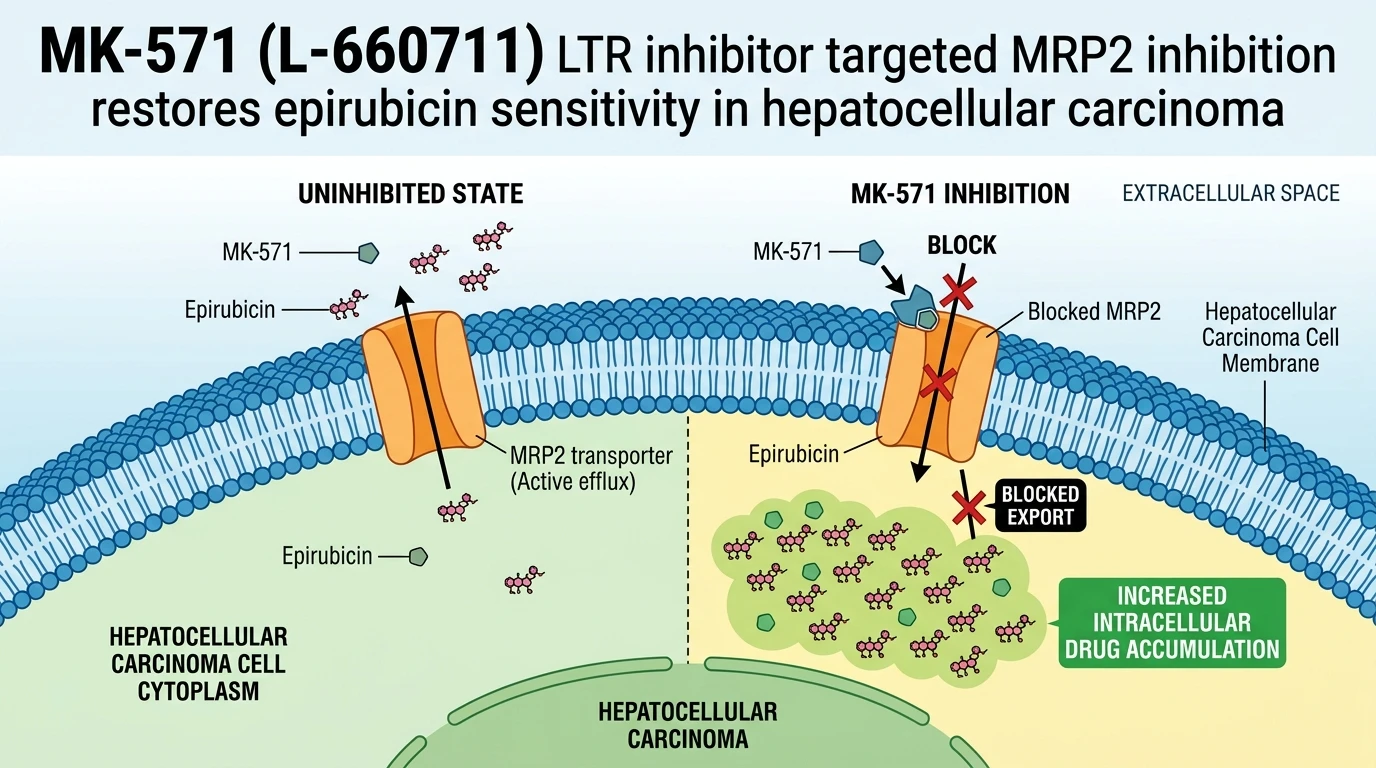
Hepatocellular carcinoma cells frequently exhibit acquired resistance to conventional chemotherapeutic regimens through ATP-binding cassette transporter activation. Multidrug resistance-associated protein 2 (MRP2, encoded by ABCC2) functions as an apical transmembrane efflux pump. In HepG2 human hepatoma cells, exposure to dietary and topical compounds such as menthol induces significant alteration of transporter expression. Experimental data demonstrate that prolonged exposure to menthol leads to pronounced transcriptional upregulation of MRP2 mRNA. This upregulation directly correlates with an increased rate of cellular drug clearance. Consequently, cytotoxic drugs including epirubicin and cisplatin are rapidly cleared from the cytoplasm. Reduced intracellular accumulation diminishes the cytocidal efficacy of these clinical antineoplastic agents.
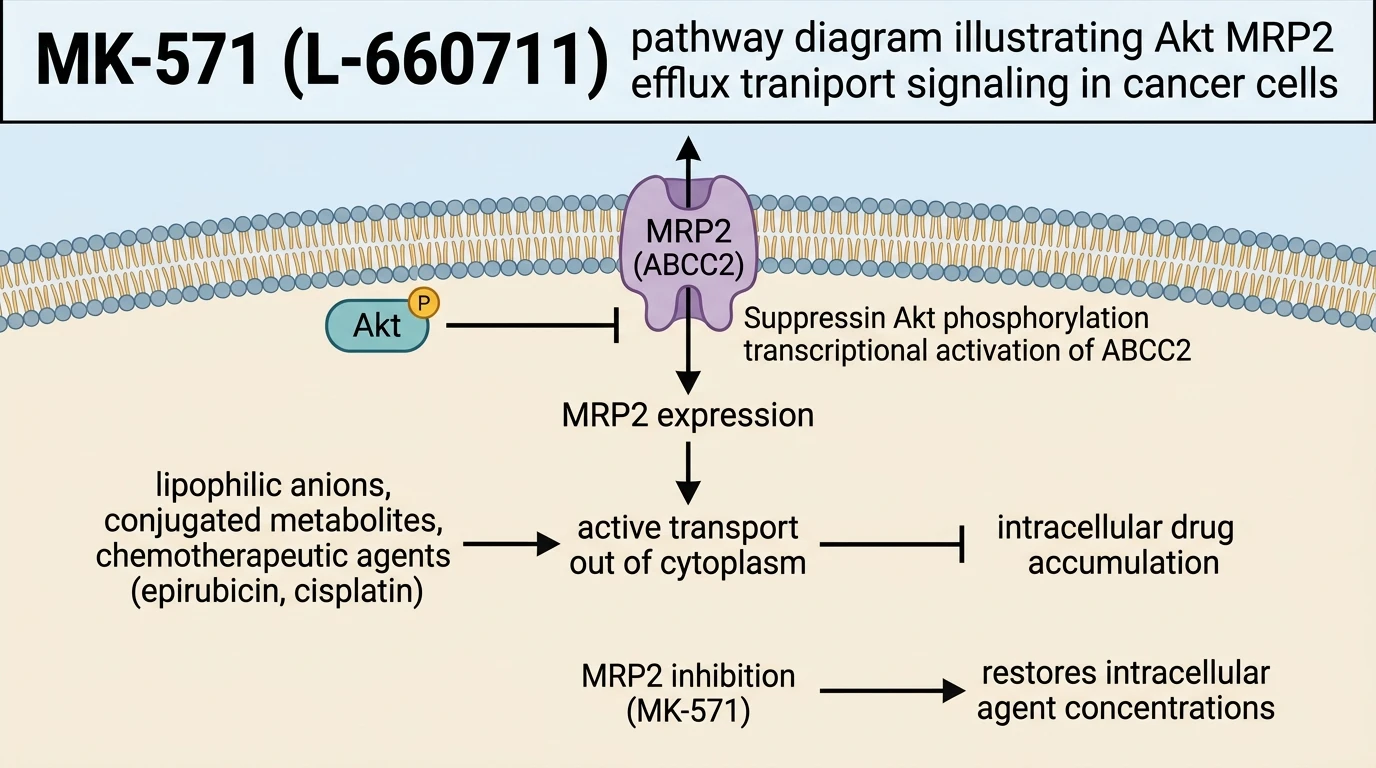
Biochemical analysis reveals that menthol-induced MRP2 upregulation relies on specific intracellular kinase modulation. Menthol exposure suppresses Akt (protein kinase B) phosphorylation. Under baseline conditions, active Akt signaling maintains transcriptional regulation of downstream transporters. When Akt signaling is suppressed, transcript levels of ABCC2 increase substantially. This pathway modulation demonstrates how non-cytotoxic xenobiotics alter drug disposition networks. To contextualize these transporter systems, researchers reference biological pathway frameworks documented in the Reactome pathway database. Elevated MRP2 levels at the canalicular membrane accelerate active efflux of lipophilic organic anions and conjugated chemotherapeutics.
Pharmacological intervention using the selective MRP2 inhibitor MK-571 (L-660711) directly interrupts this resistance mechanism. In comparative bioassays, administration of MK-571 (L-660711) effectively blocks MRP2-mediated efflux transport. This blockade reinstates intracellular epirubicin accumulation in menthol-exposed HepG2 cultures. Conversely, treatment with verapamil—a classical P-glycoprotein (P-gp/ABCB1) inhibitor—fails to restore intracellular drug retention. This distinction confirms that MRP2, rather than P-glycoprotein, serves as the primary mediator of menthol-induced chemoresistance in this hepatic model.
Understanding the specific transport kinetics of MRP2 is critical for mitigating dietary interference during chemotherapy. Menthol is widely consumed in foods, oral hygiene products, and over-the-counter remedies. Its ability to induce functional chemoresistance via Akt suppression poses a distinct clinical risk. Target engagement with MK-571 (L-660711) provides key mechanistic validation in cellular assays. Inhibiting MRP2 efflux restores cytocidal sensitivity to standard antineoplastic protocols. These findings delineate the essential requirement of monitoring dietary supplement intake in oncology patients undergoing epirubicin or cisplatin therapy.
Pharmacological Reversal of Menthol-Induced Efflux Transport
Copy code to add this image to your page
Menthol exposure suppresses Akt signaling in HepG2 cells, upregulating multidrug resistance-associated protein 2 (MRP2/ABCC2) expression. Elevated MRP2 accelerates the cellular efflux of epirubicin and cisplatin, reducing their anticancer efficacy. Pharmacological inhibition of MRP2 using MK-571 restores intracellular epirubicin accumulation, whereas P-glycoprotein inhibition with verapamil yields no effect. These findings demonstrate that MRP2 mediates menthol-induced chemoresistance, emphasizing the risk of dietary menthol consumption during chemotherapy and validating MRP2 blockade as a strategy to maintain drug sensitivity.
Akt Suppression Triggers ABCC2 Transcriptional Upregulation
Menthol exposure reduces baseline phosphorylation of Akt in HepG2 hepatocellular carcinoma cells. Diminished Akt kinase signaling leads directly to elevated ABCC2 transcript levels. This transcriptional shift alters apical membrane transport capacity. Active efflux of epirubicin increases substantially in treated cell populations. Cellular drug retention declines as efflux rates rise. Experimental observations confirm that altered kinase signaling serves as the primary driver of transporter overexpression under these assay conditions.
Selective Blockade Restores Intracellular Epirubicin Retention
Application of the selective agent MK-571 (L-660711) LTR inhibitor effectively attenuates MRP2-mediated transport kinetics in HepG2 cells. Small-molecule inhibition of MRP2 blocks active clearance of epirubicin from the cytoplasm. Intracellular drug concentrations return to baseline levels following target engagement. In contrast, P-glycoprotein inhibition with verapamil produces no detectable change in epirubicin accumulation. These findings establish that MRP2 constitutes the specific functional conduit for menthol-induced resistance. Pharmacological suppression by the MK-571 (L-660711) LTR inhibitor highlights potential target strategies for preserving antineoplastic efficacy in hepatic malignancies.